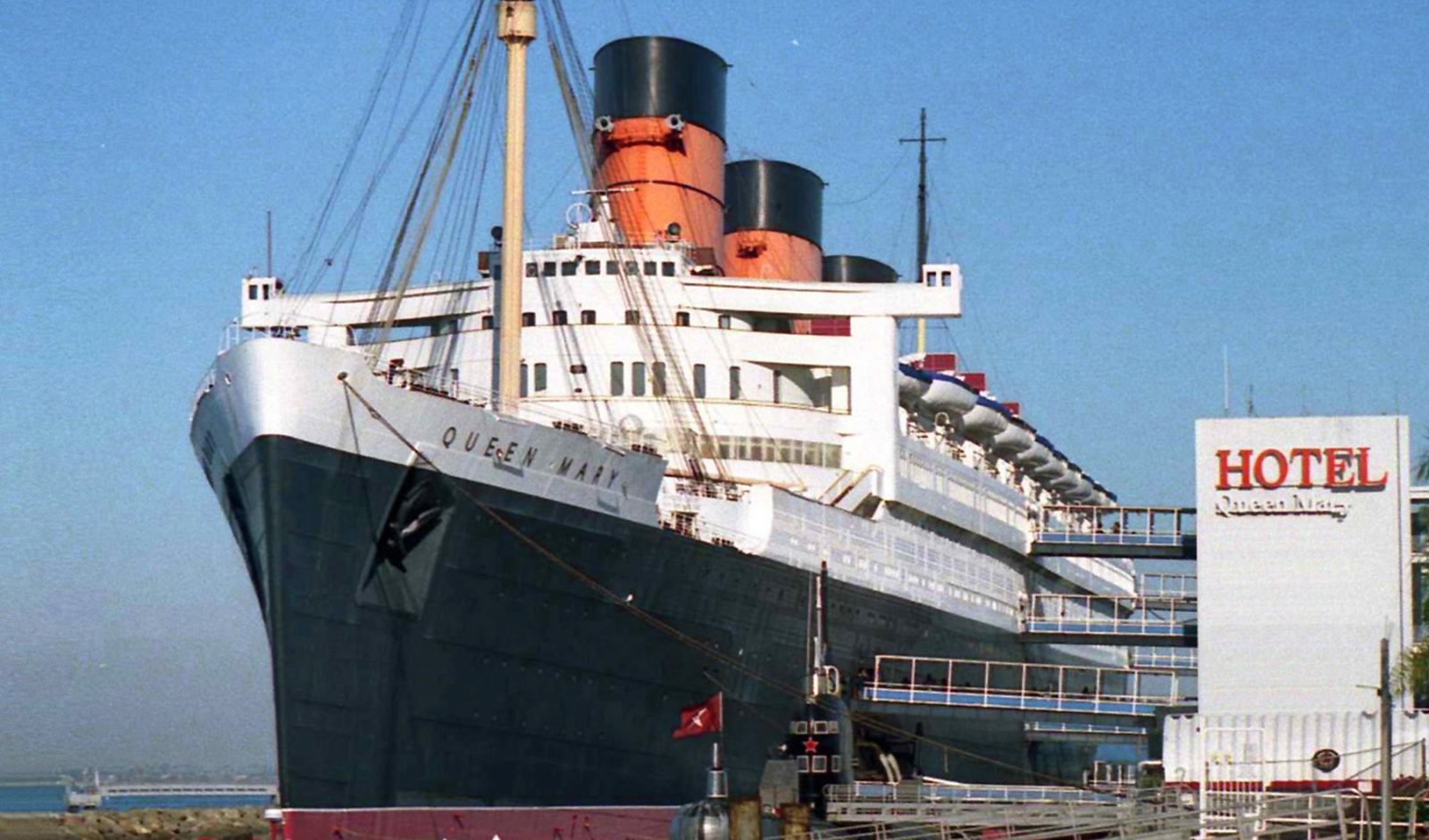
Some haunted places are crumbling ruins you have to squint at. The Queen Mary is the opposite. She is a thousand-foot Art Deco ocean liner, polished wood and brass, permanently tied up at the edge of Long Beach, California, and you can walk her decks, eat in her restaurants and even sleep in one of her old staterooms. She is also, depending on who you ask, one of the most haunted places in America. I love her for both reasons, and in this guide I want to tell her real story first, then the ghost stories, and keep the two clearly apart.
A ship built in hard times
The Queen Mary began life on the River Clyde in Scotland as plain “Hull Number 534” at the John Brown & Company shipyard in Clydebank. Work started in December 1930, but the Great Depression stopped it a year later, in December 1931, and the half-built hull sat rusting on the slipway for more than two years. The British government finally lent Cunard the money to finish her, on one condition: Cunard had to merge with its old rival, the struggling White Star Line (the company that had owned the Titanic). Cunard-White Star was formed in May 1934, and work on 534 started again.
On 26 September 1934 Queen Mary, wife of King George V, launched the ship and gave her her name. A popular story says Cunard had planned to call her Victoria and that the King misunderstood a request to name her after Britain’s “greatest queen”. It is a lovely anecdote, but it is one of those tales that is repeated more often than it is documented, so take it with a pinch of sea salt.
She left Southampton on her maiden voyage on 27 May 1936 and arrived in New York on 1 June. That August she won the Blue Riband for the fastest Atlantic crossing, lost it to the French liner Normandie in 1937, and won it back in 1938. She then held it until 1952, when the SS United States took it away.
The Grey Ghost goes to war
When the Second World War began, the Queen Mary was painted navy grey and turned into a troopship. Her speed and her new color earned her the nickname “the Grey Ghost”, which is a fun coincidence for a ship later famous for ghosts. In 1943 she carried more than 16,600 people on a single voyage, a record for the most people ever carried on one vessel.
The darkest day in her history came on 2 October 1942. Zigzagging off the coast of Ireland with thousands of American troops aboard, she collided with one of her own escorts, the light cruiser HMS Curacoa, and cut her in two. Under orders not to stop because of the U-boat threat, the Queen Mary had to keep going. 338 men from Curacoa were lost. This tragedy is real, documented history, and it is worth remembering when you hear the ship’s ghost stories.
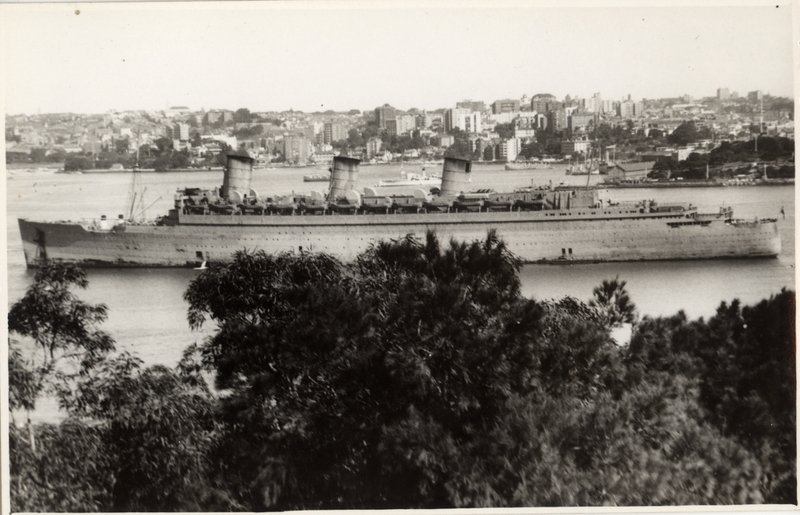
From Atlantic liner to Long Beach landmark
After the war the Queen Mary went back to carrying passengers, sailing alongside her running mate, the Queen Elizabeth. The two Queens ruled the Atlantic until jet airliners arrived in the late 1950s and emptied their cabins. By the mid-1960s she was losing money, and Cunard retired her in 1967.
The City of Long Beach bought her, and she left Southampton for the last time on 31 October 1967, Halloween, sailing around Cape Horn to California. After a long and expensive conversion she opened to the public in 1971 as a hotel, museum and attraction. Since then she has had a bumpy life: a long run under Wrather and then Disney (with Howard Hughes’s Spruce Goose flying boat displayed next door from 1983), a closure in 1992, a listing on the National Register of Historic Places in 1993, a string of operators, and another closure in 2020 during the COVID-19 pandemic. The city took the ship back, made urgent safety repairs, and she reopened to the public on 1 April 2023.
The ghost stories
Here is the honest part first. Ghost claims about the Queen Mary began in earnest in the 1980s, years after she arrived in Long Beach, and some writers suspect staff helped the stories along. Skeptics such as Joe Nickell of the Center for Inquiry have put many reports down to tired imaginations in long, creaking corridors. And despite the rumors, there is no historical record of a murder on board; most deaths on the ship were from natural causes. With that said, here are the legends people come to hear.
Door 13 in the engine room
The story most often told is about a young crewman said to have been crushed by a watertight door in the engine room during a drill in the 1960s. Guests and guides claim to have seen a figure in blue overalls near the door, now known as “Door 13”. Versions of this story name him and give a date, but I haven’t been able to confirm the details from a primary source, so I’m treating it as legend.
The first-class swimming pool
The ship’s old first-class pool, drained for decades, is the setting for the best-known legends. Visitors talk of wet footprints appearing on the dry deck, of women in 1930s swimsuits, and of a little girl, often called “Jackie”, who is said to play there and whose laughter people claim to hear. There is no documented record of a child by that name drowning on board.
Stateroom B340
Stateroom B340 has a reputation all of its own. Guests reported lights switching on, taps running and bedclothes being pulled off in the night, and the room was taken out of service for years. More recently the hotel has leaned into the legend and dressed it up as a themed “haunted” room you can book. Whether you find that delicious or a bit too theatrical is up to you.
Echoes of the Curacoa
Some visitors in the forward part of the ship claim to have heard banging and screams near the bow, the part of the ship that struck HMS Curacoa in 1942. It is the one ghost story with a real tragedy behind it, and it’s worth telling it gently.
Where to see it
The Queen Mary is moored at 1126 Queens Highway in Long Beach, California, across the harbor from downtown and close to the Aquarium of the Pacific. You can visit for a daytime tour, book a room in the hotel, or join one of the ghost-themed evening tours that the ship runs, especially around Halloween, when the ship hosts its big seasonal event. Tour names, prices and opening hours change often, so check the official Queen Mary website before you plan your trip.
A few tips from my own planning:
- Allow plenty of time. The ship is enormous and the self-guided routes cover several decks.
- Wear comfortable shoes. There are lots of stairs and steep companionways.
- If you want ghost stories, book an evening tour. The engine room and pool areas are much more atmospheric after dark.
- Stand at the bow for a moment and remember the men of HMS Curacoa. It puts the legends in perspective.
My take
I don’t know whether anyone walks the Queen Mary’s corridors after midnight. What I do know is that this ship carried film stars and royalty across the Atlantic, ferried hundreds of thousands of soldiers through a world war, and survived decades of near-misses with the scrapyard. Every creak in her teak decks is a piece of that history. If a few ghosts make people come and see her, I’m all for it.
FAQ
Is the Queen Mary really haunted?
There is no proof that it is. The ghost stories began mostly in the 1980s, after the ship came to Long Beach, and there is no record of a murder on board. Many visitors still report strange experiences, and the ship embraces its haunted reputation with ghost tours.
Can you stay overnight on the Queen Mary?
Yes. The ship operates as a hotel with rooms in her original staterooms. Check the official site for current room types and availability.
What is Door 13 on the Queen Mary?
Door 13 is a watertight door in the engine room linked to the legend of a young crewman crushed there in the 1960s. It is one of the stops on the ship’s ghost tours.
How did the Queen Mary end up in Long Beach?
The City of Long Beach bought her when Cunard retired her in 1967. She made her final voyage from Southampton that year and opened as an attraction in 1971.
Top image: The Queen Mary in Long Beach today. Photo: Mike Fernwood (derivative work: Altair78), CC BY-SA 2.0, via Wikimedia Commons