Late on an autumn afternoon, the story goes, a ball of fog rises off the North Platte River in Wyoming. It doesn’t drift and spread the way river mist does. It holds together and rolls toward the bank. Then a sailing ship comes out of it, an old-fashioned vessel with masts, spars and sails glittering with frost. A frozen crew stands on deck, silent and staring. At a command they step aside or lower a sheet of canvas, and there is a corpse, and the person watching from the shore knows the face. Before he can move, the ship is gone. Later he learns that the person he saw died that same afternoon.
That’s the Platte River “Ship of Death,” one of the best-known ghost stories in Wyoming. But when you trace it back, the trail ends at a single magazine article from 1948, and the evidence suggests the ship was written, not seen.
The story as Vincent Gaddis told it
The earliest known version is an article called “Wyoming’s Ship of Death” by Vincent Gaddis, published in the first issue of Fate magazine in spring 1948. I haven’t been able to see Gaddis’s original text, so what follows comes from the summaries and quotations in Joe Nickell’s 2021 investigation for Skeptical Inquirer and from later retellings. Where the retellings add details, I’ve said so.
According to Nickell, Gaddis presented three sightings. All followed the same pattern: a man sees an ice-covered ship on the Platte, a ghostly crew reveals a corpse on a square of canvas, the ship vanishes, and he later learns that someone he loved died that very afternoon.
1862: Leon Webber. Gaddis describes Webber as an Indian scout. Later retellings call him a trapper. The corpse he saw on the deck was his fiancée. A 2024 retelling by Cowboy State Daily gives the date as September 12, 1862, names the fiancée as Margaret Stanley, and puts the sighting six miles southeast of the present Guernsey Dam. I can’t tell which of those details are in Gaddis’s original and which were added later.
1887: Gene Wilson. A cattleman, Wilson saw a woman’s “terribly burned” face on the canvas and recognized his wife. Some retellings add that he hurried home to find his house burned down and his wife dead.
1903: Victor Heibe. On November 20, 1903, the homesteader Heibe, who had testified for the hired gunman Tom Horn at his murder trial in Cheyenne, saw the body of his friend hanging from the cross-arm of a gallows on the ship’s deck. Heibe had glanced at his watch, which read 3:15. As Nickell reads it, Gaddis implies that this was the moment Horn was hanged. Later retellings place this sighting at Bessemer Bend, near present-day Casper. The name also turns up as Hiebe and Hieber.
Gaddis said all three accounts came from one source, a body called the Cheyenne Bureau of Psychological Research. According to Nickell, the first two accounts are quoted in full and marked “(signed),” and the third is told mostly in Gaddis’s own words. The article ends with a flourish: “When will it again appear with its tale of gruesome tragedy?”
A sailing ship on the Platte?
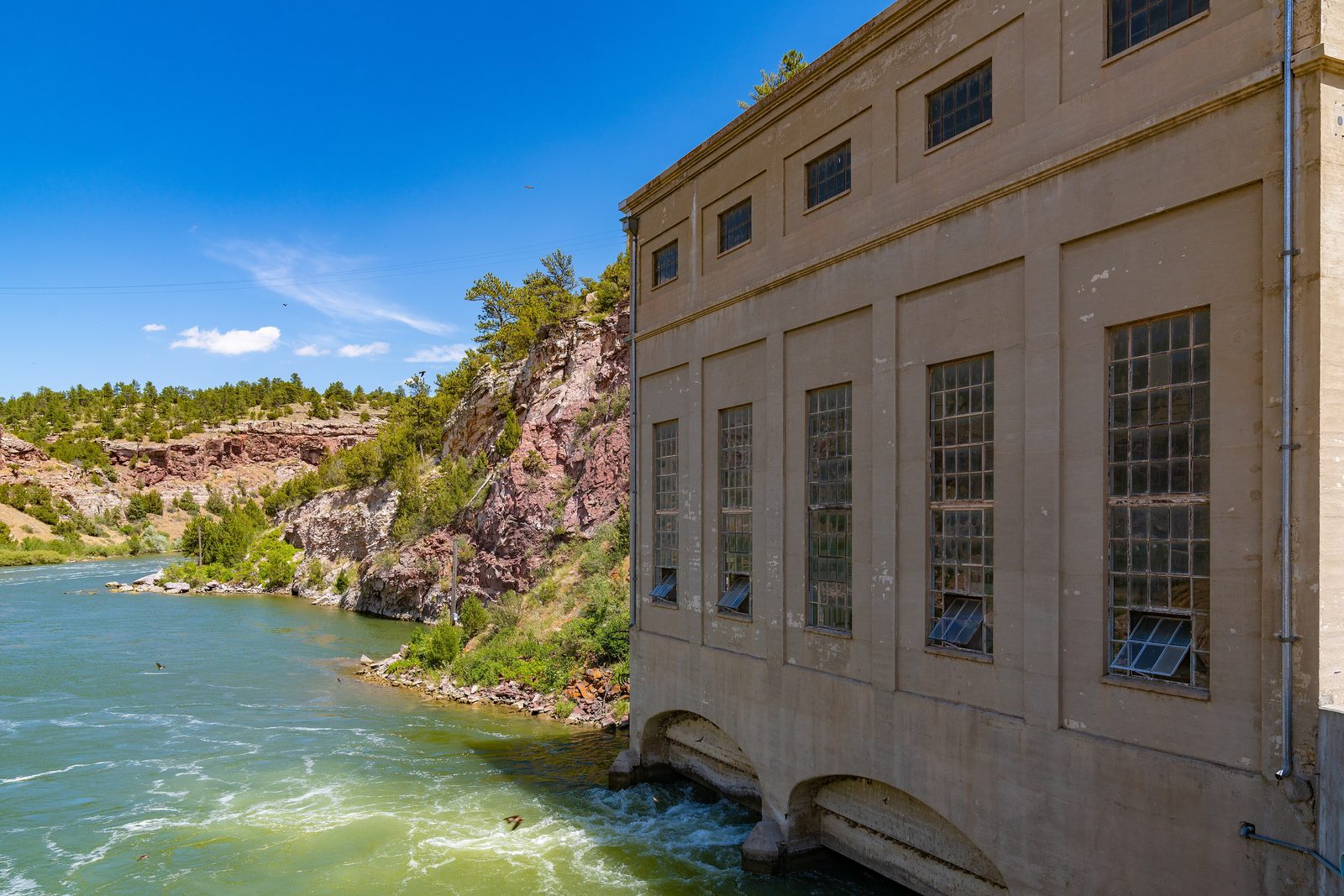
The first thing that should make you blink is the ship itself. The North Platte in Wyoming is a wide, shallow, braided river. Emigrants on the Oregon, California and Mormon trails followed it west, and they crossed it by ferry and ford. It was never a route for anything like a full-rigged sailing vessel.
The investigation
In 2021, Joe Nickell, a longtime paranormal investigator and Skeptical Inquirer columnist, set out to find out whether the “thrice-documented” ship had any documentation at all. His article, “The Wyoming Death Ship: Truth Be Told,” is the most thorough look at the story I’ve found.
The witnesses. Research done for Nickell by Tim Binga, the Center for Inquiry’s library director, turned up no trace of Leon Webber or Victor Heibe. One name did check out, sort of. An Eugene Wilson, aged 35 and listed as widowed, appears in Wyoming in the 1900 U.S. census. That fits the story, but it doesn’t confirm it. As Nickell asks, why would Wilson’s signed account never give his wife’s name or the date she died?
The bureau. Nickell’s search of books and the internet found no evidence that a Cheyenne Bureau of Psychological Research ever existed, except in sources that come from Gaddis. That matters a lot, because Gaddis said all three accounts came from it. As Nickell puts it, if the bureau never existed, “then Gaddis is revealed as the creator.”
The writing. The three “independent” accounts sound remarkably alike. All three describe “a sailing vessel”: “of an ancient type” (Webber), “full-rigged” (Wilson), “ancient” (Heibe, as paraphrased by Gaddis). All three have a square or sheet of canvas, and all three lean on the same passive phrasing. Nickell ran a standard readability formula on them and found reading levels of 10, 10 and 12 years of schooling, which seems high for a scout, a cattleman and a homesteader. And the closing line, “the vasty deep,” is Shakespeare, from Henry IV, Part 1.
The Tom Horn problem
The one part of the story you can check against the historical record is the last one, and it doesn’t hold up.
Tom Horn was real. He was a range detective and hired gun during Wyoming’s range wars, and he was convicted of the 1901 ambush killing of 14-year-old Willie Nickell. (Joe Nickell notes that the boy was a distant relative.) Horn was hanged in Cheyenne on November 20, 1903, so the date in the story is right.
The time isn’t. Citing Larry D. Ball’s 2014 biography Tom Horn in Life and Legend, Nickell reports that Horn was hanged at 11:08 a.m. and pronounced dead sixteen minutes later, not at 3:15 in the afternoon. Nickell calls the watch detail verisimilitude, the fiction writer’s trick of adding a convincing detail.
Another small clue is the Guernsey Dam reference in some retellings of the 1862 sighting. The dam wasn’t built until the 1920s, so no account actually written in the 1860s could give directions from it. Since I haven’t seen Gaddis’s text, I can’t say whether that detail is his or was added later.
Who was Vincent Gaddis?
Vincent H. Gaddis (1913–1997) wrote fiction early in his career, according to Nickell. He later became famous as the writer who gave the Bermuda Triangle its name, in a 1964 article for Argosy.
The magazine matters too. Fate was launched in 1948 by Ray Palmer, the former editor of the science-fiction pulp Amazing Stories, and Curtis Fuller. Jerome Clark, a former Fate editor, has acknowledged that “purely fictitious stories, some written by Palmer under various pseudonyms, appeared in the magazine.” Nickell’s conclusion is blunt: “Wyoming’s Ship of Death” is “surely” one of Gaddis’s fictional stories.
To be fair, Gaddis never admitted that, and as far as I know nobody has found a manuscript or letter that settles it. What we can say is that there’s no record of the ship, the witnesses or the bureau before 1948, and the one checkable detail is wrong.
How the story spread
Once it was in print, the story took on a life of its own. Dolores Riccio retold it as “Wyoming’s Ship of Death” in More Haunted Houses (1991, with Joan Bingham). Dennis William Hauck summarized it in Haunted Places: The National Directory (1996), with what Nickell calls “some errors and important omissions.” Online it spread through Tom Rizzo’s 2013 “Legend of the Platte River Ship of Death,” Legends of America, Only in Your State, podcasts, and Cowboy State Daily’s 2024 “Haunted Wyoming” feature.
Along the way the details drifted. The names are spelled Webber, Weber, Heibe, Hiebe or Hieber. Legends of America places the ship “between Torrington and Alcova.” The Town of Guernsey’s own history page now describes “the legend of the Phantom Ship of the Platte River” as having begun to circulate in the 1860s, part of “Guernsey’s cultural heritage.” I couldn’t find any printed source from the 1860s or the decades after that mentions it. I also didn’t find it in the WPA Writers’ Project guide to Wyoming. My search wasn’t exhaustive, so if an earlier source turns up, I’d love to hear about it.
That’s what makes this ghost ship interesting. A story that seems to have been made up for a magazine in 1948 has, in less than eighty years, become local folklore.
Visiting the real places
You won’t see a frost-covered ship, but the places named in the story are real and worth the trip, especially on a quiet autumn afternoon.
Bessemer Bend, southwest of Casper, is the setting later retellings give for the 1903 sighting. It’s an Oregon Trail site on the North Platte with access managed by the Bureau of Land Management.
Guernsey, linked to the 1862 sighting, is close to two Oregon Trail landmarks: the Oregon Trail Ruts and Register Cliff, where emigrants carved their names. Guernsey Dam and Guernsey State Park are just upstream.
Fort Laramie National Historic Site, downstream near the town of Fort Laramie, preserves the old fur-trade and army post on the trail and an 1875 iron bowstring truss bridge over the North Platte.
Hours and access change with the season, so check with the managing agencies before you go. And if the fog does come up off the river late in the day, it’s easy to see how a writer could imagine a ship in it.
Sources: Joe Nickell, “The Wyoming Death Ship: Truth Be Told,” Skeptical Inquirer (2021); Vincent Gaddis, “Wyoming’s Ship of Death,” Fate 1(1), spring 1948 (via Nickell); Cowboy State Daily; Legends of America; Town of Guernsey; Facts-Chology.
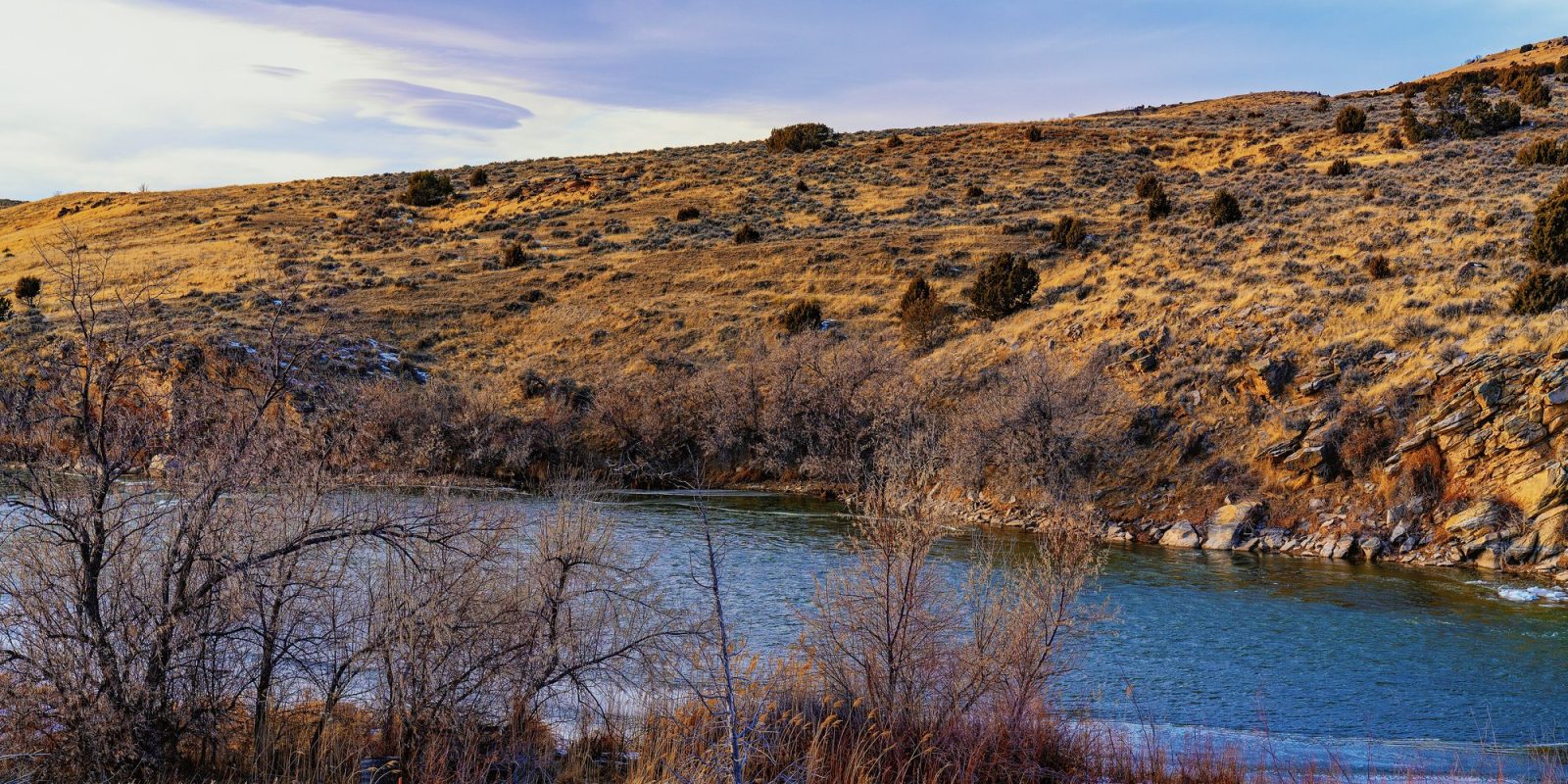
Top image: The North Platte River near Bessemer Bend, Casper, Wyoming, December 2022. Photo: Tony Webster, CC BY 2.0, via Wikimedia Commons