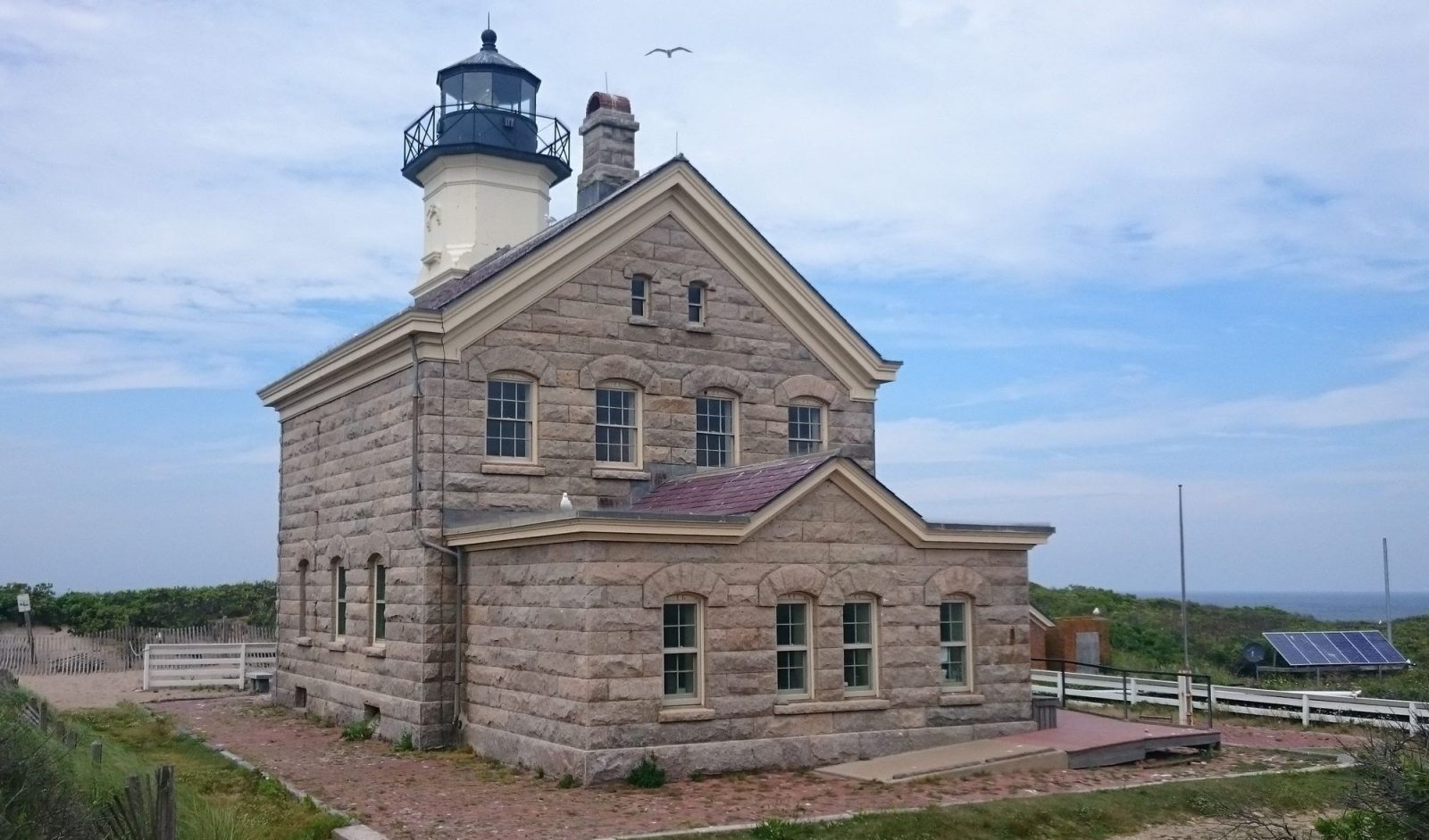
On Block Island, folks have a story about a ship that burns but never burns up. It shows up as a flame out on Block Island Sound, the tale goes, usually somewhere between Christmas and New Year’s, and if you try to get close it drifts away. Islanders call it the Palatine Light, after the ship it’s supposed to be. In the most famous version of the legend she was lured onto the rocks by wreckers, stripped of everything worth taking, and set on fire with a screaming woman still aboard.
The real story is quieter, and sadder. There was a ship. She ran aground on the north end of Block Island in a snowstorm just after Christmas 1738, and most of the people who boarded her never reached America. But the documents point to disease, hunger, and a brutal winter crossing, not murderous islanders.
The ship that wasn’t called the Palatine
Her real name was the Princess Augusta. She was a British merchant ship bound for Philadelphia, carrying emigrants from the Palatinate and neighboring lands in what is now southwest Germany. Ships like her were called “Palatine ships,” and the label eventually replaced her name. Her identity was pinned down after her officers’ depositions surfaced in 1925. The Society of Colonial Wars in Rhode Island reprinted them in 1939 under a title that says it outright: the Princess Augusta “was apparently the ‘Palatine’ of Whittier’s poem.”
Sources disagree on her size and passenger count: about 300 tons in one tradition, 220 tons and roughly 240 emigrants according to the Rhode Island Historical Cemetery Commission. A 1739 newspaper report and Jill Farinelli’s 2017 book The Palatine Wreck, the most thorough modern study, both put the number who set out at about 340.
What the 1739 reports actually say
The earliest account I could find is a Newport news item dated January 11, 1739, printed in the Boston Weekly Post-Boy and transcribed in the Beavertail Lighthouse Museum’s shipwreck files. It reports a letter from Block Island to Rhode Island’s governor, John Wanton:
…a large ship of about 300 tons was cast away on said island the 26th of December last… having on board 340 Palatine passengers and servants, bound to Philadelphia, but having a long passage near 200 of them died while on it; the remainder came on shore, and 20 of them are dead since they came on the island.
According to the same report, Captain Long died at sea and the mate took over. When island gentlemen repeatedly urged him to let the passengers take their belongings off the ship, “he absolutely refused it.”
The officers’ depositions tell their own story, which isn’t surprising. They describe a voyage short on provisions, with half the crew dead and others crippled by the cold, and a heavy snowstorm that drove the ship ashore. They say the new captain, Andrew Brook, urged everyone to save what they could of the ship and cargo “both before and after She broke to Pieces.” That’s sworn testimony from the men most likely to be blamed.
Even the date is a little slippery: the newspaper says December 26, while the depositions, as published in 1939, give December 27. Farinelli counts about 105 people still alive when the ship grounded. Other retellings say roughly 150 passengers came ashore.
The Beavertail compilation places the stranding near Sandy Point, the island’s northern tip, possibly first on a shoal called the Hummock, with the ship then drifting and coming ashore again near Cow Cove. What happened to the hull afterward is the real mystery. Some accounts have her refloated and towed into a cove, others have her scuttled or burned, and a few local historians think she was repaired and went on her way. No wreckage has ever been firmly identified.
How the legend grew
Farinelli traces rumors about the crew, and about some islanders, to the months right after the wreck. Within about a century two terrifying versions were in circulation. Both are folklore, not documented history.
In the first, the crew murdered their captain, dragged the voyage out, and charged starving passengers outrageous prices for food and water before abandoning the ship. In the second, the islanders hung out a false light to lure the ship onto the rocks, then robbed and murdered the people on board and burned the ship to hide what they’d done. Both versions usually include a woman who wouldn’t leave. Some tellings name her Mary Vanderline, and they have her scream from the flames as the burning ship drifts out to sea. I couldn’t find any documentary evidence that she existed.
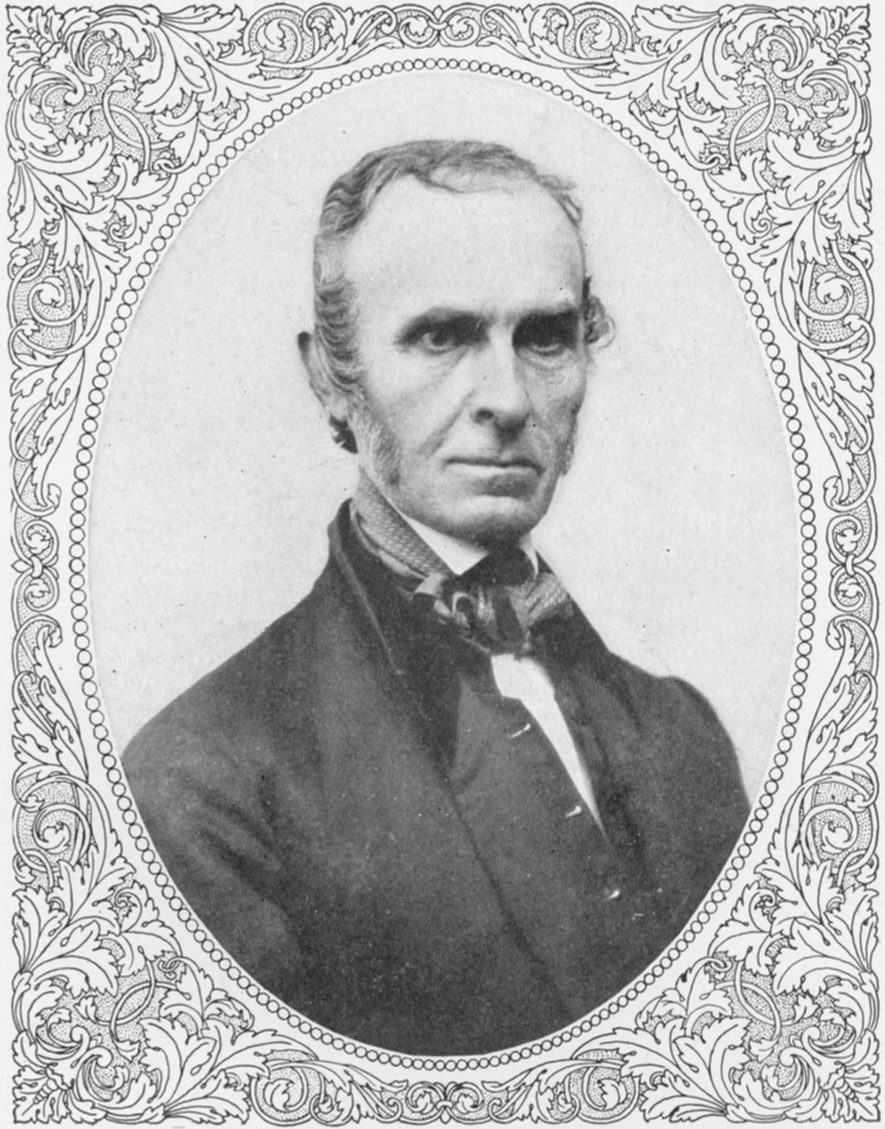
Richard Henry Dana Sr.’s 1827 poem “The Buccaneer,” with its burning phantom ship, is often linked to the Palatine, though the 1877 Block Island historian Samuel T. Livermore insisted it should not be. Then in 1867 John Greenleaf Whittier published “The Palatine” in The Atlantic Monthly, based on a version told to him by Joseph P. Hazard. Whittier gave Block Island the wreckers’ version in full: the false lights, the plunder, the burning. His poem ends with the phantom:
And the wise Sound skippers, though skies be fine, / Reef their sails when they see the sign / Of the blazing wreck of the Palatine.
Islanders were not pleased. In his 1877 History of Block Island, Livermore said he had spent two years questioning the oldest residents and concluded that the passengers “received no treatment but kindness from the Islanders,” and that the ship was never burned by them, “since to them every stick of its timbers, and every bolt were valuable.” He blamed the atrocity story on three dubious witnesses, calling them “a witch, an opium-eater, and a maniac.” The “witch” was Dutch Kattern, a passenger who stayed on the island and later made part of her living telling fortunes. She and a second woman who stayed are remembered as Long Kate and Short Kate.
The Palatine Light: what people said they saw
Tradition says it first appeared a year after the wreck. I couldn’t find a record from 1739 to back that up, so I’m treating it as folklore. The documented sightings come later.
The best of them comes from Dr. Aaron C. Willey, a physician living on the island. On December 10, 1811, he wrote a letter to the New York scientist Samuel L. Mitchill, which Livermore reprinted:
Its appearance is nothing different from a blaze of fire.
Willey said he had seen it himself only twice, on an evening in February 1810 and again on December 20 that same year, and that islanders were so used to it they rarely bothered to mention it. He said it could be seen blazing six or seven miles out, where “strangers suppose it to be a vessel on fire.” And he was careful to keep the Palatine at a distance: it was the believers, he wrote, whose “fantastic and distempered imaginations” gave the light “masts, ropes, and flowing sails.”
Folklorist Michael Bell quotes Benjamin Congdon, an islander born around 1788, as saying he had seen “the burning Palatine ship” eight or ten times or more. Congdon said that in his day nobody doubted she was sent to punish the men who had murdered her passengers. Livermore, who rejected the murder story, still accepted that a “phenomenal light” had appeared in the Sound over the previous century, and wondered whether burning gas might explain it. In 2004, former first warden Martha Ball told the Boston Globe that when she was growing up, people said “no two people saw it at the same time.” Her only relative who claimed a sighting was, she noted with a laugh, the uncle who also claimed six ducks with one shot.
Farinelli writes that hundreds of people have reported the light over the centuries; I’ve only included accounts I could trace to a named source.
The Palatine Graves
The most solid piece of the story is a mass grave. The passengers who died after reaching Block Island were buried on the island’s southwest side, and in 1947 the Block Island Historical Society set up a marker that reads simply “Palatine Graves 1738.” The Rhode Island Historical Cemetery Commission lists the site as cemetery BI005, off Dickens Lane, and the Town of New Shoreham includes Palatine Graves among the island’s nine cemeteries, noting that the historic ones are open to the public. As far as I could tell, it’s the only physical trace of the disaster left on the island.
Visiting
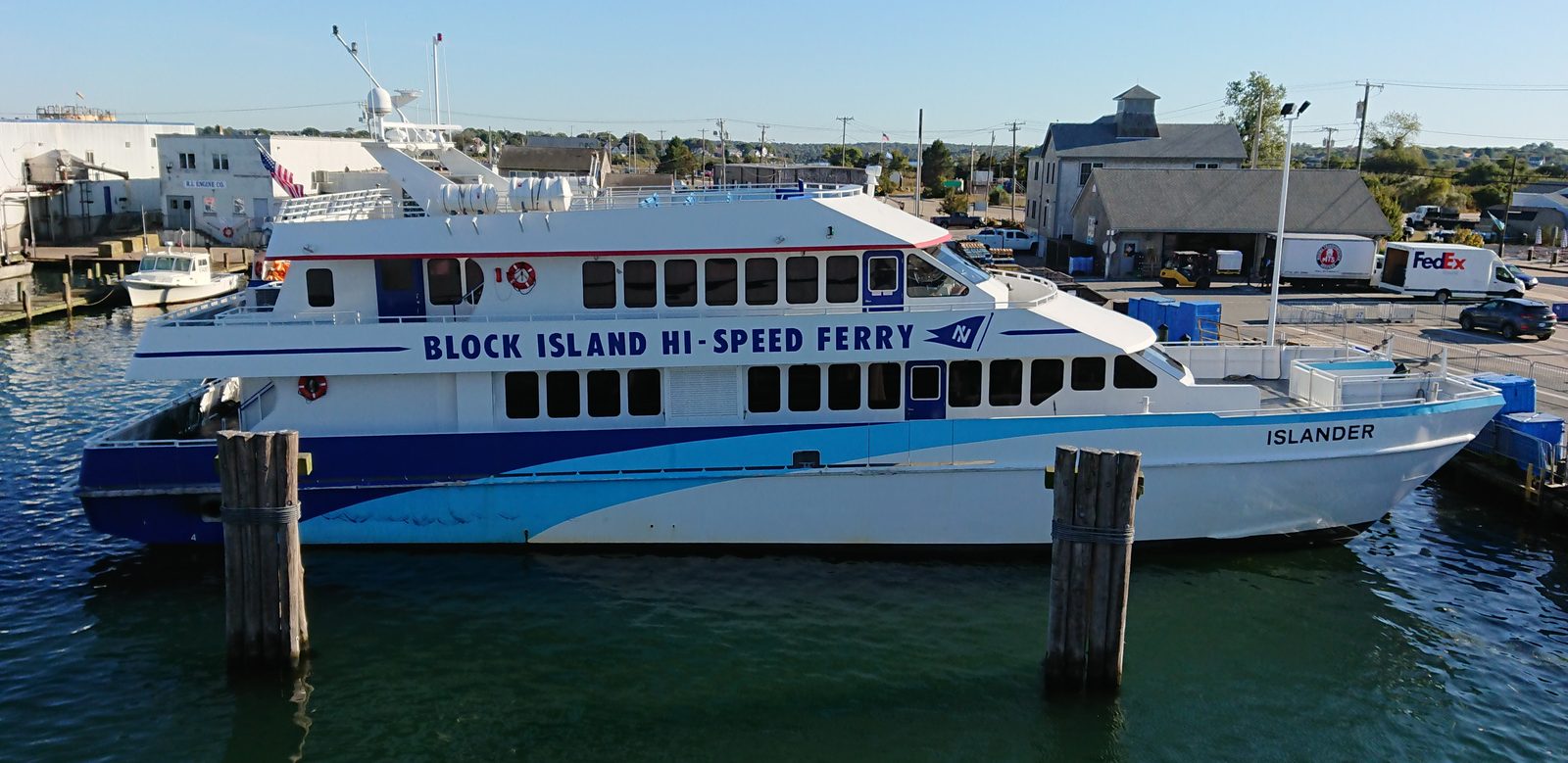
Year-round ferries run to Block Island from Point Judith in Narragansett, Rhode Island,, with seasonal boats from other ports such as New London, Connecticut; check current schedules. The graves are on the southwest side of the island; the town website posts a cemetery map, which helps, since the site is small. It’s a burial ground; please treat it as one. The Block Island Historical Society at 18 Old Town Road, a short walk from the Old Harbor ferry landing, is the best place to learn more. As of this writing its website says it’s closed for the season until Holiday Stroll weekend in late November, so check ahead. For the Palatine Light, the traditional spot is off Sandy Point, at the north end near Block Island North Light, especially around the turn of the year.
A real tragedy that became a ghost story
Strip away the legend and what’s left is still haunting: families who left their homes in the spring of 1738, a crossing so long and cold that around two hundred of them died at sea, and a few frozen survivors put ashore on a strange island in a blizzard, where some of them died and were buried in a common grave. The islanders who probably nursed them were later cast as monsters, largely thanks to a poem, and an unexplained light took the name of a ship that may never have burned. If you ever see a fire out on the Sound in late December, the people worth remembering are the ones under that 1947 marker.
Sources: Depositions of officers of the Palatine ship “Princess Augusta” (Society of Colonial Wars in Rhode Island, 1939); 1739 newspaper reports transcribed by the Beavertail Lighthouse Museum; Samuel T. Livermore, A History of Block Island (1877); Jill Farinelli, The Palatine Wreck; Boston Globe (2004); New England Historical Society; Rhode Island Historical Cemeteries; Town of New Shoreham; Block Island Historical Society.
Top image: Block Island North Light near Sandy Point, where the Palatine Light is traditionally seen. Waz8, CC0, via Wikimedia Commons.