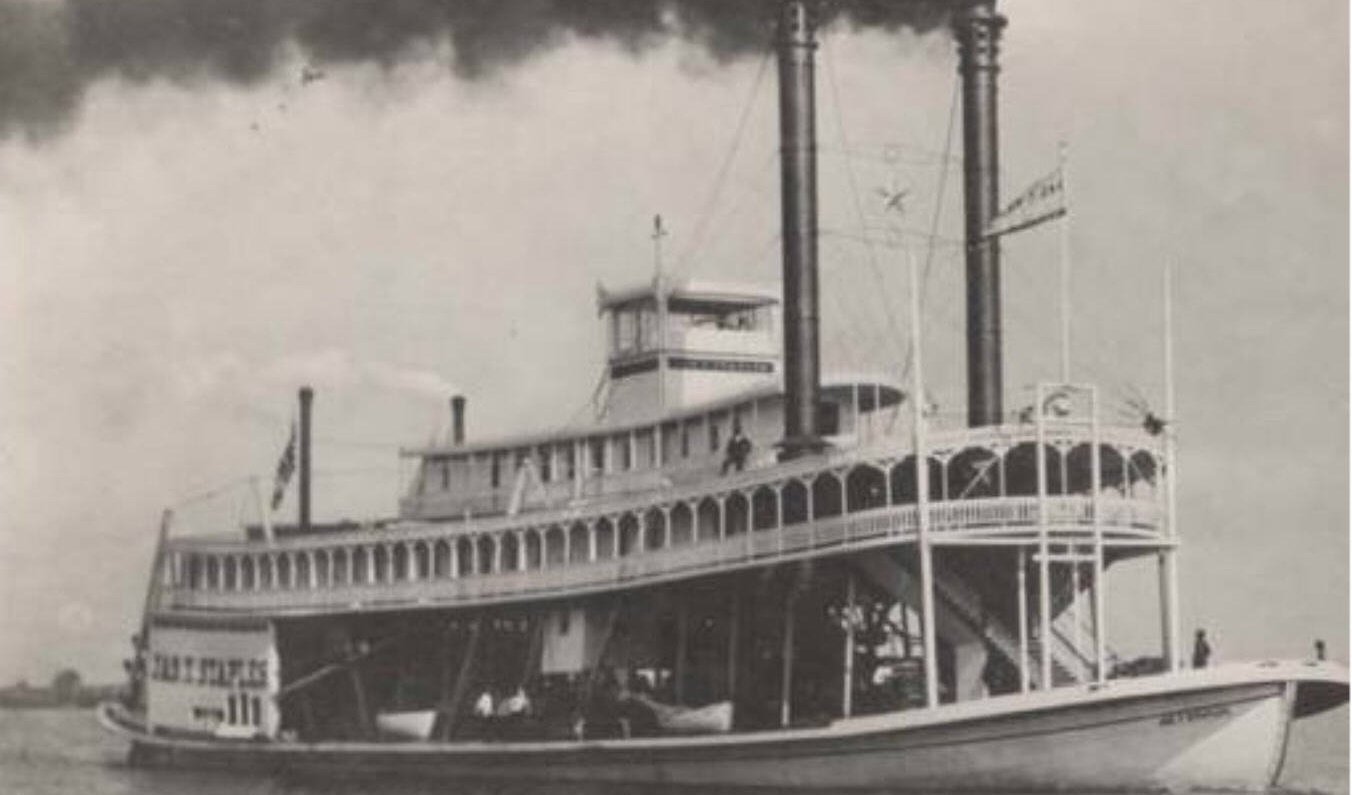
Alabama’s rivers have no shortage of sad stories, but few are as strange as that of the James T. Staples. She was the pride of the Tombigbee, a big, handsome sternwheeler that carried cotton and passengers between Mobile and Demopolis. Within about a week of her former owner’s funeral, her boilers blew apart at a landing near the very cemetery where he lay. Rivermen at the time thought the timing was eerie, and so do I. Here is what the records say, and then the ghost story that has been told about her ever since.
The “Big Jim” of the Tombigbee
The boat was registered as the Jas. T. Staples, and rivermen nicknamed her the “Big Jim”. She was completed in Mobile in 1908 at a cost of about $40,000, a large sum for a river packet at the time. She was big enough to carry around 2,500 bales of cotton, and she was widely described as one of the finest boats built for the Tombigbee since the Civil War.
The boat was the project of Captain Norman A. Staples of Mobile, and she was named for his father, James T. Staples. Accounts don’t quite agree on who did what. Some say Norman designed and built her and named her in his father’s honor; others say father and son built her together and Norman inherited her. Either way, by 1912 she belonged to Norman, and she ran the Tombigbee route between Mobile and Demopolis.
Debt, a seizure and a funeral
River trade in the early 20th century was a hard business. Railroads were taking the freight, and competition between boat lines was fierce; some local accounts say a larger steamboat company was squeezing out independent owners like Staples. By 1912 Norman Staples was in serious financial trouble, and in late December 1912 his creditors took possession of the boat.
On 2 January 1913, Norman Staples took his own life with a shotgun. He was buried in the cemetery at Bladon Springs, a small Choctaw County resort town a short way from the Tombigbee. It’s a heartbreaking end, and I want to tell it gently: he was a real man with a family, not just a character in a ghost story.
The explosion at Powe’s Landing
About a week later, the James T. Staples was back at work under her new management, with a new captain, heading upriver from Mobile. She stopped at Powe’s Landing (sometimes written Powes or Poe’s Landing), roughly four miles from Bladon Springs and about six miles above today’s Coffeeville Lock and Dam, to take on wood. There, without warning, her boilers exploded.
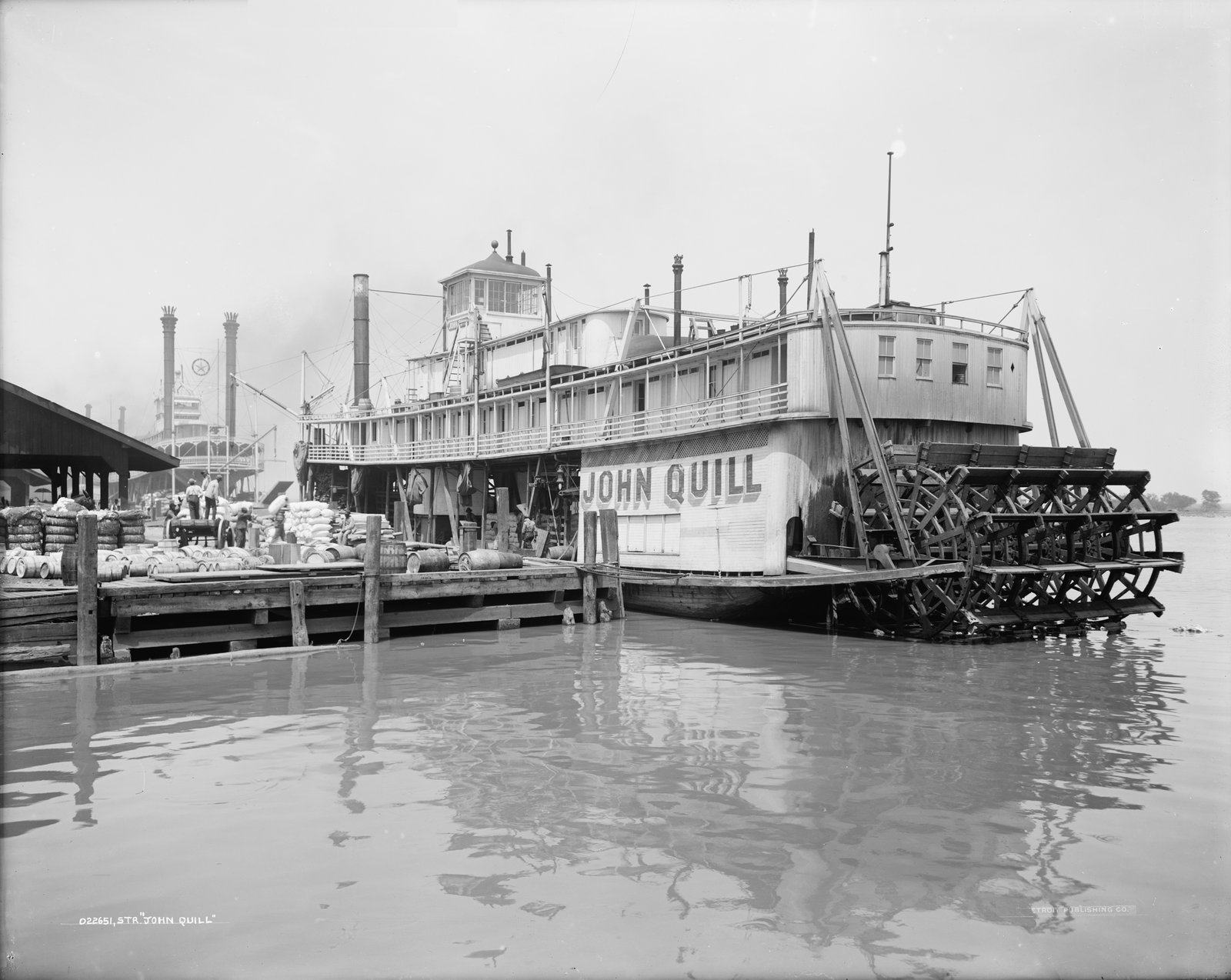
The blast wrecked the boat. Most sources put the toll at 26 people killed and 21 injured. Among the dead was the new captain; a newspaper of the time, the Wilcox Progressive Era, named a Captain Bartee, along with the second clerk and the chief engineer. The burning, broken boat drifted from the landing and sank near the bank. Survivors were picked up by the crew of the John Quill, another big sternwheeler working the same river, which carried them to Mobile.
What caused it? Nobody ever proved anything. Some blamed human error, as with so many steamboat boiler explosions of the era. Others whispered about sabotage. Neither theory was ever settled. The hull, engines and two of the boilers were later raised from the river and reused to build a new boat, the Peerless, launched in 1914. The Staples is remembered as the last great steamboat disaster on the Tombigbee.
A note on dates
Sources disagree on the exact date. Wikipedia and many shipwreck lists give 10 January 1913. Some ghost-story retellings say 13 January, and one local historian, citing a Columbus newspaper of 13 January, says the boat reached the spot on 9 January, a week to the day after the captain’s death. I’ve gone with “about a week after the funeral”, which all the versions agree on. If you can see a contemporary newspaper, I’d love to hear the exact date.
The ghost story
Here is where history gives way to legend. The best-known version comes from the Alabama storyteller Kathryn Tucker Windham, who told it as “The James T. Staples, Doomed Steamboat of the Tombigbee” in her book Jeffrey’s Latest 13: More Alabama Ghosts. Local historians tell versions too, and some of the strange details were apparently reported in newspapers at the time.
As the legend goes:
- The boat’s regular captain refused to take her out on the day of Norman Staples’s funeral and went to the funeral instead, so the owners had to find a new captain.
- After the funeral, crewmen said they saw Staples walking the decks at night. Some of them quit, and the men who replaced them claimed to see him too.
- When the boat came in to the dock, every rat aboard is said to have poured off the decks and fled up the bank, the old sailors’ sign that a ship is doomed.
- Engine-room crew reported seeing a figure under the boilers shortly before the explosion, and abandoned the engine room in fright.
- An old man in Coffeeville, whom townspeople called a prophet, is supposed to have predicted the disaster.
- Some versions add that the boilers exploded at the same hour of the day that Staples died, and that the wreck came to rest as close to his grave as the boat could get.
I can’t confirm any of these from primary records, and some of them, like the rats and the hour of the explosion, have the polished feel of a story that has been told many times. But it’s notable that rivermen at the time already regarded the timing “with awe”, in the words of one 1913 newspaper. You don’t have to believe in ghosts to feel a shiver at a boat blowing up near its dead captain’s grave a week after his funeral.
Where to see it
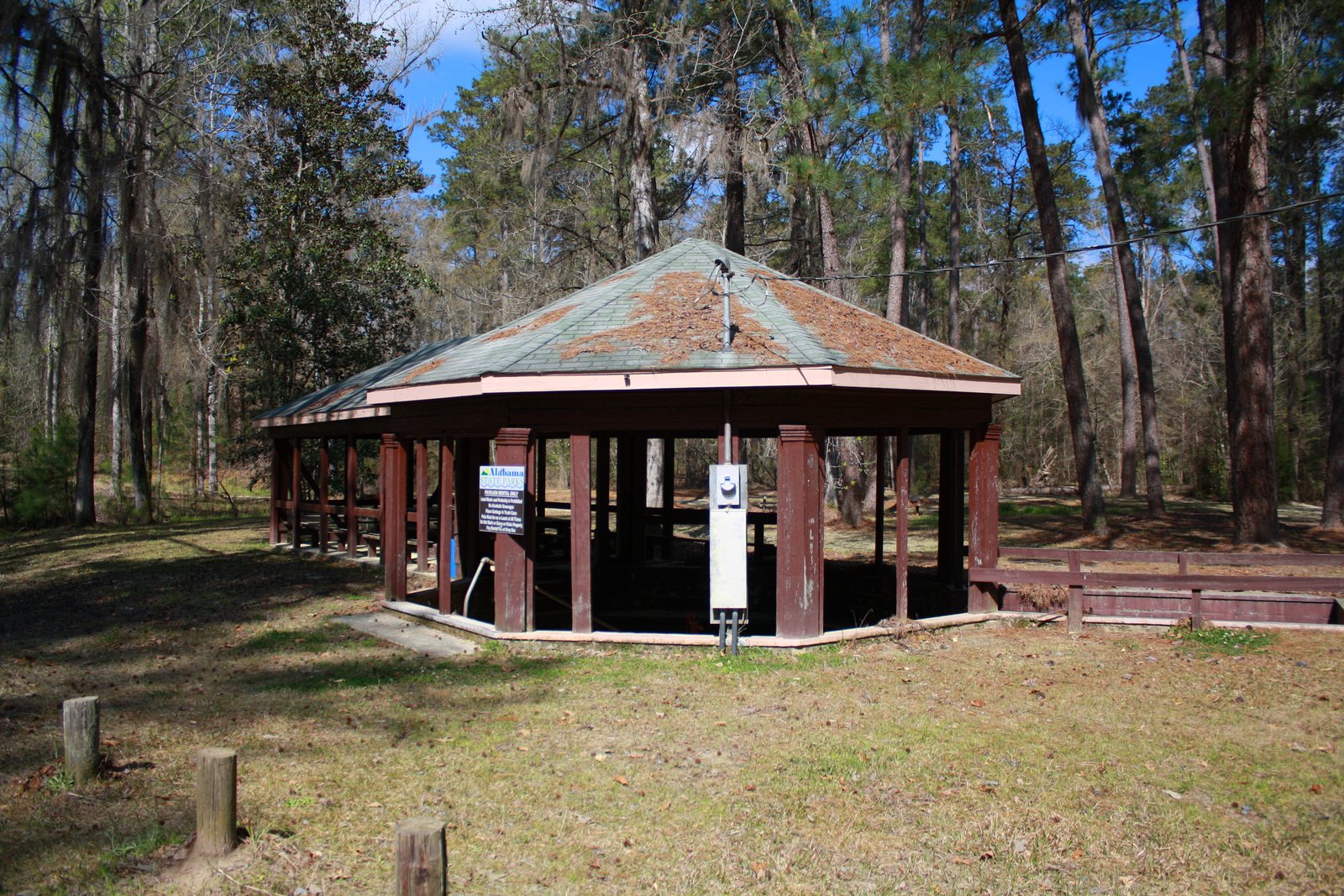
There’s no wreck to visit; the remains were salvaged more than a century ago. But you can visit the places in the story. Bladon Springs, in Choctaw County, was a well-known 19th-century spa town. The small Bladon Springs State Park preserves the old mineral springs and a pavilion, and the Bladon Springs cemetery where Norman Staples is buried is nearby. Please be respectful in the cemetery: it’s a burial ground, not an attraction.
The Coffeeville Lock and Dam area, downriver, gives you a view of the Tombigbee itself, wide, brown and quiet now. Facilities and access change, so check with the park and the U.S. Army Corps of Engineers before you go. This is rural country, so plan ahead for fuel and food.
My take
What I love about the Staples story is that it sits right at the boundary of history and folklore. The boat, the debt, the death, the explosion and the 26 victims are all real. The ghost under the boilers is the kind of thing frightened people tell each other afterwards to make sense of something senseless. Both parts deserve to be remembered.
FAQ
When did the James T. Staples explode?
In January 1913, about a week after Captain Norman Staples’s death on 2 January. Most sources give 10 January 1913, though some retellings give other dates.
How many people died?
Most sources say 26 people were killed and 21 injured, including the boat’s new captain.
Is the James T. Staples haunted?
The legend says Norman Staples’s ghost was seen on board before the explosion. These stories were collected by Kathryn Tucker Windham and others, but there’s no documentary proof.
Can you see the wreck?
No. The hull, engines and two boilers were salvaged and reused in the steamboat Peerless in 1914.
Top image: The James T. Staples docked at Mobile, between 1908 and 1912. Photographer unknown, public domain, via Wikimedia Commons