On the coldest, windiest nights of late winter, people along the Tombigbee River in west Alabama say you might see a steamboat on the dark water, lit from end to end, with music drifting from her decks. Then you realize she is on fire. The Eliza Battle burned and sank here in 1858, and she has been one of the South’s most famous ghost ships ever since. Her real story is every bit as dramatic as the legend, so let’s start there.
The finest boat on the Tombigbee
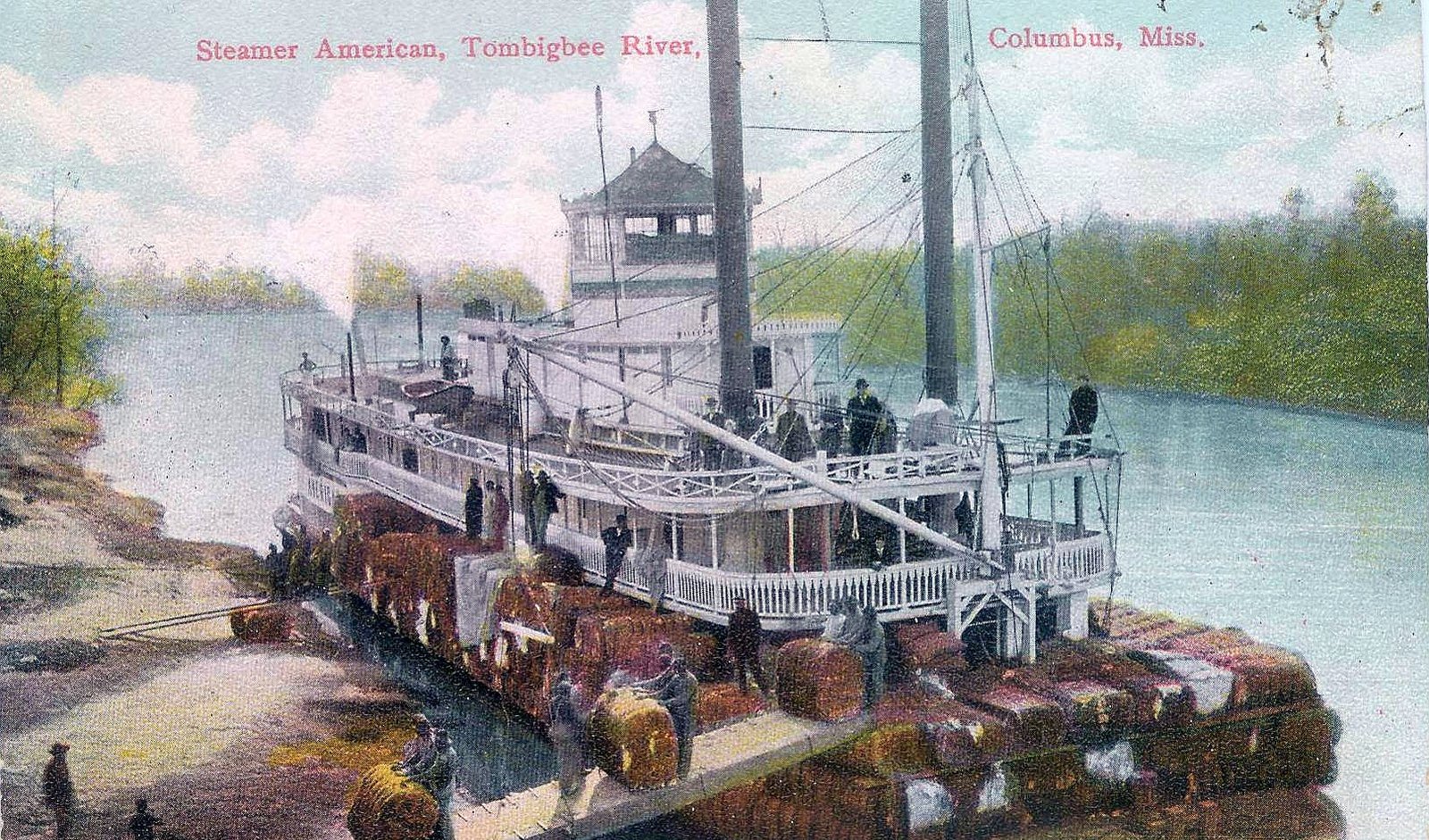
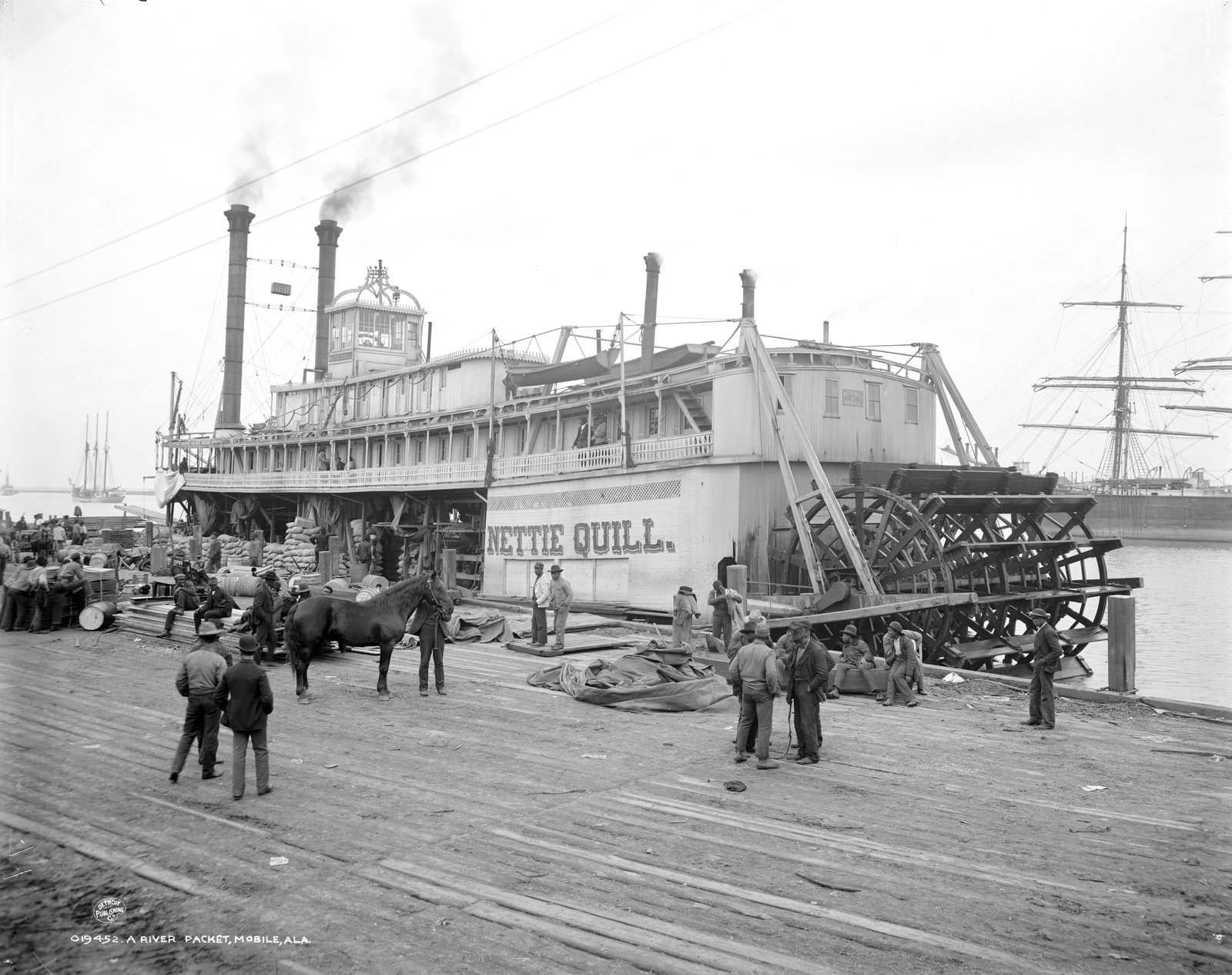
The Eliza Battle was a side-wheel paddle steamer, launched in New Albany, Indiana, in 1852. She was a wooden boat of about 316 tons, run out of Mobile by Cox, Brainard and Company, and she carried passengers and cotton between Columbus, Mississippi, and Mobile, Alabama. She was famous for her luxury. When former President Millard Fillmore visited Mobile in April 1854, a reception was held for him aboard the Eliza Battle.
The upper Tombigbee was only deep enough for a boat like her during the winter and spring floods, so the big runs to Columbus happened in the cold months. That detail matters for what happened next.
The last voyage, February 1858
At the end of February 1858 the Eliza Battle left Columbus for Mobile, under Captain S. Graham Stone with Daniel Epps as pilot. The river was high and rising. She stopped at landings such as Pickensville and Gainesville, and by the time she left Demopolis on 28 February she was heavily loaded with passengers and cotton. Sources give between about 1,200 and 1,400 bales.
The weather turned savagely. A bitter north wind blew in, close to a gale, and according to accounts of the night the temperature dropped by around 40°F in just a couple of hours. Rain turned to sleet, and ice formed on the decks and on the trees along the banks.
At around 2 a.m. on 1 March 1858, some 32 miles below Demopolis, the crew found the cotton on the after deck on fire. The cause was never established. One local historian suggests sparks from a passing steamer, the Warrior, but contemporary reports simply say the fire started among the cotton bales. The north wind drove the flames through the boat in minutes.
The captain tried to put her ashore, but the river was out of its banks, there was no proper bank to land on, and the ropes controlling the rudder burned through. Passengers, many in their nightclothes, were cut off from the lifeboat by the flames. Their choice was fire or the freezing, flooded river. Some floated on cotton bales; some clung to trees in the flooded woods until dawn. Survivors were rescued by local people in small boats and by the steamer Magnolia.
Courage in the cold
Out of that terrible night came stories of real bravery. Local historian Rufus Ward tells of assistant pilot Thomas Bradly helping a young woman, a Miss Robinson, onto a floating cotton bale to keep her out of the icy water. Local families along the river put out in skiffs in the dark to search the flooded woods, pulling half-frozen people from the branches. Afterwards, the survivors held a meeting in Mobile and passed resolutions praising the officers and crew for their efforts to save the passengers. It’s worth remembering them alongside the ghost.
A survivor, Charles McKay, later wrote that when morning came, “twenty-eight were missing” and had “only escaped the fearful but quick death of fire to perish by the still more feared, because more lingering, death of cold.” His count differs from the newspapers’, which is a good reminder of how confused that night was.
How many died?
The figure most often given, based on the Mobile Advertiser report reprinted in the New York Times in March 1858, is 33 dead, about half crew and half passengers. Most died of drowning or the cold rather than the fire itself. The number of people on board is usually given as roughly 60 passengers plus about 45 crew. Later retellings give anywhere from about 30 to 90 dead, so treat any exact number with care. It was, by any count, the worst disaster in the river’s history.
The burned hull came to rest above Kemp’s Landing, near where the Alabama 114 bridge now crosses the river at Pennington, and sank there. The wreck is reported still to lie on the river bottom in about 28 feet of water. The Encyclopedia of Alabama places the sinking near Moscow Landing, just north of Pennington; the landings are close together, and old sources name them differently.
The legend of the phantom steamboat
It didn’t take long for the river people to start telling of a ghost. The best-known version is Kathryn Tucker Windham’s “The Phantom Steamboat of the Tombigbee”, in her classic book 13 Alabama Ghosts and Jeffrey (1969). As the story goes:
- On cold, windy nights in late winter, especially around the anniversary in February and early March, the Eliza Battle rises from the river, blazing with light.
- Some witnesses say they hear music, as if a party is going on in the main cabin; others say they see her already in flames.
- Sightings are reported along the stretch from just north of Pennington down to around Nanafalia.
- Rivermen and fishermen took a sighting as a warning: bad luck or disaster was coming to anyone on the river.
The legend says sightings happen in February, while the fire itself broke out in the small hours of 1 March. That’s an easy blur to make: the boat set off in February and burned on the first night of March, and the bitter weather was February weather. I’ve kept the legend’s own wording here but given the documented date in the history section above.
Is anything really out there? I can’t tell you that. But the river along there is broad and dark, the winter nights are long, and fog and reflected lights can do strange things. And the people who live along the Tombigbee have kept the memory of the Eliza Battle alive for more than 160 years, which is a kind of haunting in itself.
Where to see it
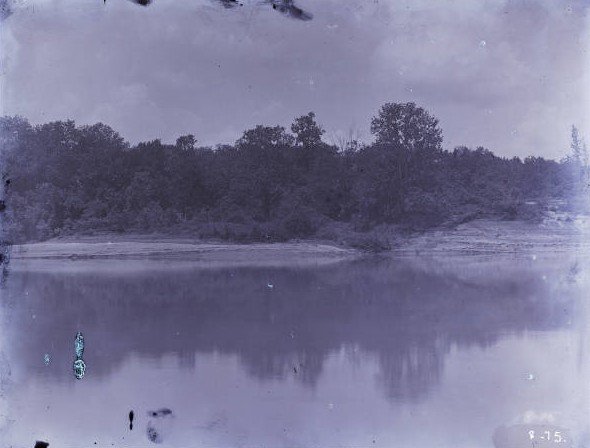
There’s nothing of the boat to see above water, and you shouldn’t try to dive on the wreck. But you can visit the stretch of river where it happened. Pennington, in Choctaw County, sits by the Tombigbee near the Alabama 114 bridge. The Encyclopedia of Alabama mentions a boat launch at Lock Number 2 Park and the old Naheola Bridge as local landmarks. Demopolis, upriver, is a good base, with historic homes and river views. Check local opening times before you travel, and remember that much of the riverbank is private land.
If you go on a cold February night, wrap up warm, keep your eyes on the water, and tell me if you see any lights.
FAQ
When did the Eliza Battle burn?
The fire broke out at about 2 a.m. on 1 March 1858, after the boat left Demopolis on 28 February. The legend often says February, because that’s when the voyage began.
How many people died on the Eliza Battle?
Contemporary reports gave 33 deaths, most from drowning or exposure in the freezing river. Later accounts vary widely.
Where did the Eliza Battle sink?
Near Pennington, Alabama, on the Tombigbee River, close to the modern Alabama 114 bridge. The wreck is reported to lie in about 28 feet of water.
Where does the ghost story come from?
It’s local river folklore, best known from Kathryn Tucker Windham’s “The Phantom Steamboat of the Tombigbee” in 13 Alabama Ghosts and Jeffrey.
Top image: No image of the Eliza Battle is known to survive. This postcard shows a later steamboat, the American, on the Tombigbee at Columbus, Mississippi, where the Eliza Battle began her last voyage (c. 1890–1920). Publisher unknown, public domain, via Wikimedia Commons