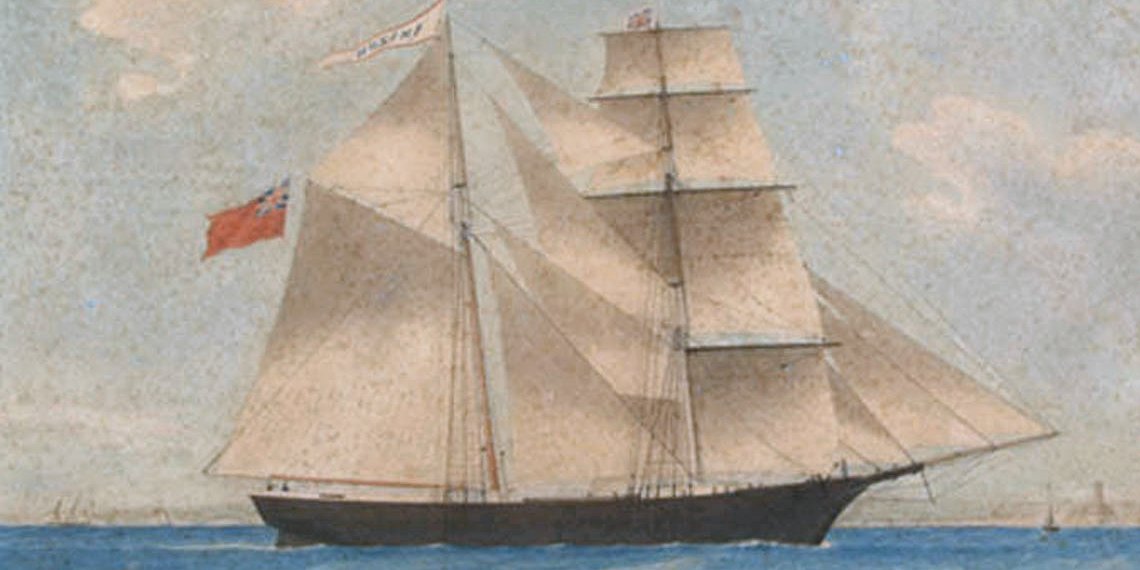
On 4 December 1872, between the Azores and the coast of Portugal, the crew of a small Canadian ship spotted another vessel moving oddly, sails ragged, yawing in the wind. Nobody was at the wheel. When they rowed over and climbed aboard, they found the ship empty: no captain, no crew, no captain’s wife and baby daughter. There was food and water, the cargo was intact, and personal belongings were still in the cabins. The ship was the Mary Celeste, and more than 150 years later we still don’t know exactly what happened to the ten people on board.
It isn’t a ghost story in the usual sense, but it has become the world’s most famous “ghost ship”. It has also been buried under so much fiction that the real story is often lost. So let’s look at what is documented, what was made up, and what the best theories are.
An unlucky ship from Nova Scotia
The Mary Celeste didn’t start life under that name. She was built at Spencers Island, on the Bay of Fundy in Nova Scotia, and launched on 18 May 1861 as the Amazon. Her start was unlucky: her first captain, Robert McLellan, fell ill and died in June 1861, before her first real voyage. In 1867 she was driven ashore in a storm on Cape Breton Island and abandoned as a wreck.
She was salvaged, sold on, and in 1868 an American, Richard Haines, bought and repaired her, registered her in New York and renamed her Mary Celeste. In 1872, after a major refit, a group headed by New York ship owner James H. Winchester owned most of her, and her new captain, Benjamin Spooner Briggs, held a share too.
Captain Briggs and the final voyage
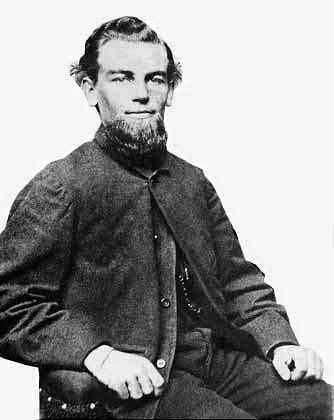
Benjamin Briggs, born in Wareham, Massachusetts, in 1835, was an experienced and respected captain, and by all accounts a sober, religious man. For this voyage he brought his wife, Sarah, and their two-year-old daughter, Sophia. Their seven-year-old son, Arthur, stayed at home in Massachusetts with his grandmother.
The crew of seven included first mate Albert Richardson, second mate Andrew Gilling, steward Edward Head, and four seamen from the German Frisian Islands. Briggs wrote to his mother that he was well satisfied with ship and crew. The cargo was 1,701 barrels of alcohol, bound for Genoa in Italy.
The Mary Celeste left her pier in New York on 5 November 1872, waited off Staten Island for better weather, and headed out into the Atlantic on 7 November.
What the Dei Gratia found
About a week later the Canadian brigantine Dei Gratia, under Captain David Morehouse, set out from New York for Gibraltar. On 4 December, her crew spotted the Mary Celeste and went to investigate. First mate Oliver Deveau led the boarding party.
What they found, according to the evidence later given in Gibraltar:
- The ship was seaworthy but in a mess. Some sails were set, others torn or missing, and rigging hung over the sides.
- There was about three and a half feet of water in the hold, a lot, but not enough to sink her.
- The ship’s only lifeboat was gone.
- The ship’s papers (except the log) and the captain’s navigation instruments were missing.
- There were six months’ worth of food and water aboard, and the cargo of alcohol was almost entirely intact.
- A makeshift sounding rod, used for measuring water in the hold, was lying on deck.
The last entry on the log slate was at 8 a.m. on 25 November, recording the ship near Santa Maria Island in the Azores. She had drifted for days without anyone at the helm. Morehouse put Deveau and two sailors aboard, and the two ships sailed to Gibraltar, arriving on 12 and 13 December.
The Gibraltar hearing
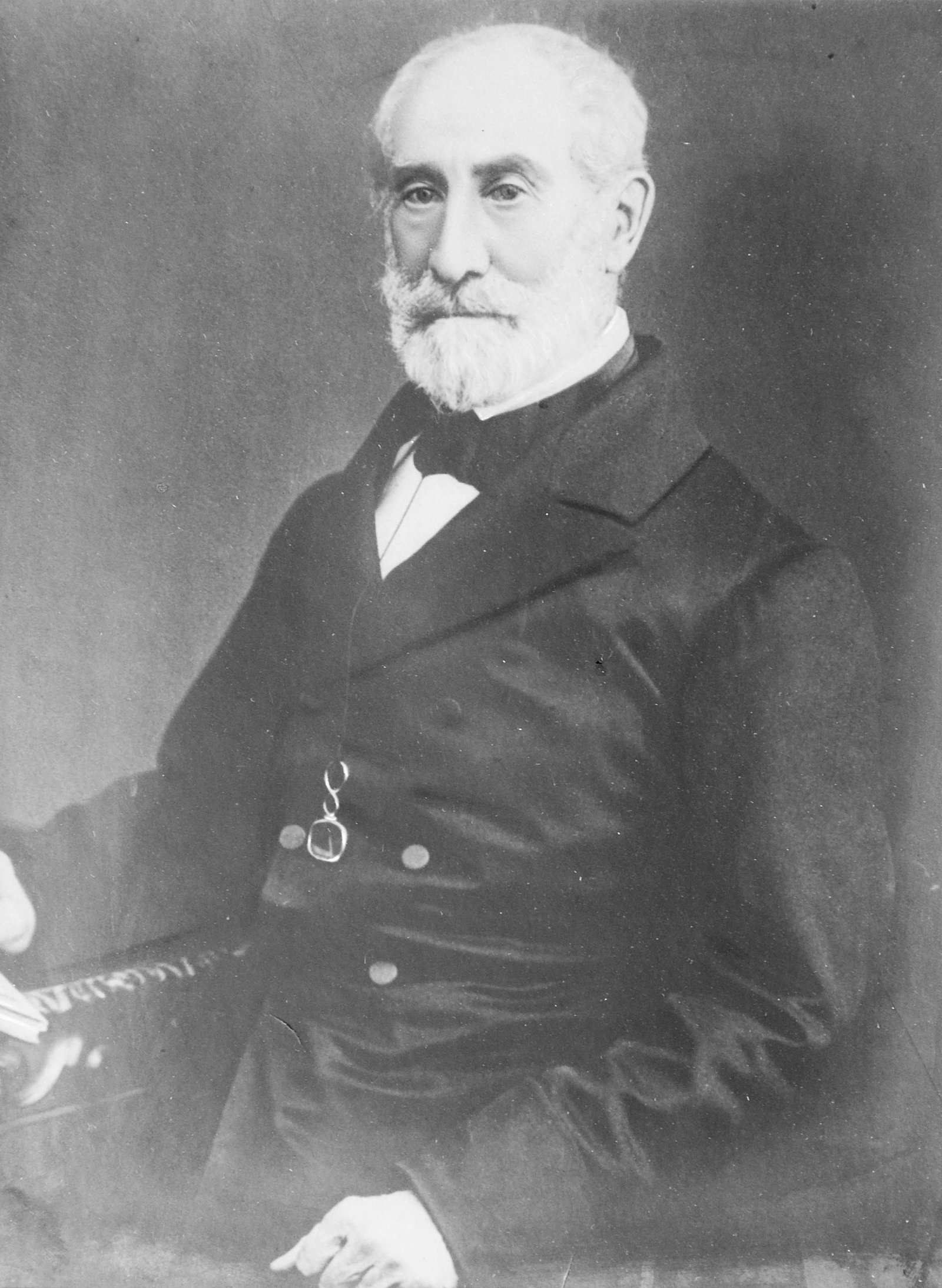
The salvage hearing in Gibraltar was led by the colony’s Attorney General, Frederick Solly-Flood, who was convinced there had been foul play. He suspected that the crew had got drunk on the cargo and killed the Briggs family, or that the Dei Gratia’s crew had done something sinister to claim the salvage money. Stains found on board and a mark on the rail were examined, but nothing supported a crime. In the end the court awarded the Dei Gratia’s crew £1,700, about one-fifth of the value of ship and cargo, which was less than many expected. That low award suggests that suspicion still hung over them, even though nothing was ever proven.
How fiction took over
A lot of what “everyone knows” about the Mary Celeste comes from a story. In 1884 a young doctor named Arthur Conan Doyle, not yet famous for Sherlock Holmes, published “J. Habakuk Jephson’s Statement” in the Cornhill Magazine. It was fiction, but readers took it seriously, and it introduced details that are still repeated today: half-eaten breakfasts, still-warm cups of tea, everything left as if the crew had simply vanished. Doyle also called the ship the “Marie Celeste”, and that misspelling has stuck ever since.
Later hoaxes added to the muddle. In 1913 The Strand Magazine published a supposed survivor’s account from an “Abel Fosdyk”, claiming the crew had drowned when a temporary platform collapsed while they watched a swimming race. It was full of errors and is not taken seriously today.
What really happened? The main theories
Fear of an explosion
One of the best-supported theories is that the captain ordered everyone into the lifeboat because he feared the cargo was about to explode. When the cargo was unloaded in Genoa, nine of the barrels were found empty. They were made of red oak, which is more porous than the white oak used for the rest. Briggs’s cousin Oliver Cobb believed that alcohol fumes, rumbling in the hold or even a small explosion could have frightened Briggs into abandoning ship, planning to wait at a safe distance on a line, which then broke.
A false reading of water in the hold
Another theory points to the sounding rod found on deck. If the pumps had failed, or the sounding gave a false impression that the ship was flooding fast, Briggs may have thought she was sinking and ordered everyone off near Santa Maria. A 2007 documentary also suggested that coal dust from an earlier cargo could have clogged the pumps.
Waterspouts, sea quakes and squid
Other ideas include a waterspout, an undersea earthquake, or even a giant squid. None explains everything, especially the missing lifeboat and instruments, which suggest an orderly departure.
Pirates or mutiny
Nothing valuable was taken and there were no signs of a struggle, so most historians reject piracy and mutiny.
What all the realistic theories share is this: something made an experienced captain think his ship was in danger, he took everyone into a small boat, and that boat was lost at sea.
The end of the Mary Celeste
The ship sailed on for another twelve years under various owners. Her final captain, Gilman C. Parker, deliberately ran her onto the Rochelois Reef off Haiti in January 1885 as part of an insurance fraud. In 2001 an expedition led by author Clive Cussler announced it had found her remains there, but later tree-ring tests showed the wood came from trees still growing in the 1890s, so that wreck almost certainly isn’t her.
Where to see it
Spencers Island, Nova Scotia, where the ship was built, has a monument at the old shipyard site and a small outdoor cinema built in the shape of the ship’s hull. It’s a quiet, beautiful spot on the Bay of Fundy. A lap desk said to have belonged to Captain Briggs is held by the Peabody Essex Museum in Salem, Massachusetts. Check with the museum before visiting to see if it is on display.
FAQ
How many people were on the Mary Celeste?
Ten: Captain Benjamin Briggs, his wife Sarah, their daughter Sophia, and seven crew members. None were ever seen again.
Was there really a warm meal on the table?
No. The half-eaten breakfast and warm tea come from Arthur Conan Doyle’s 1884 short story, not from the evidence given at the inquiry.
Is it Mary Celeste or Marie Celeste?
The ship’s real name was Mary Celeste. “Marie Celeste” comes from Conan Doyle’s story.
Has the wreck of the Mary Celeste been found?
A wreck found off Haiti in 2001 was thought to be her, but tree-ring dating later showed the timber was too young.
Top image: The Mary Celeste, then named Amazon, in 1861. Painter unconfirmed, possibly Honoré Pellegrin, public domain, via Wikimedia Commons