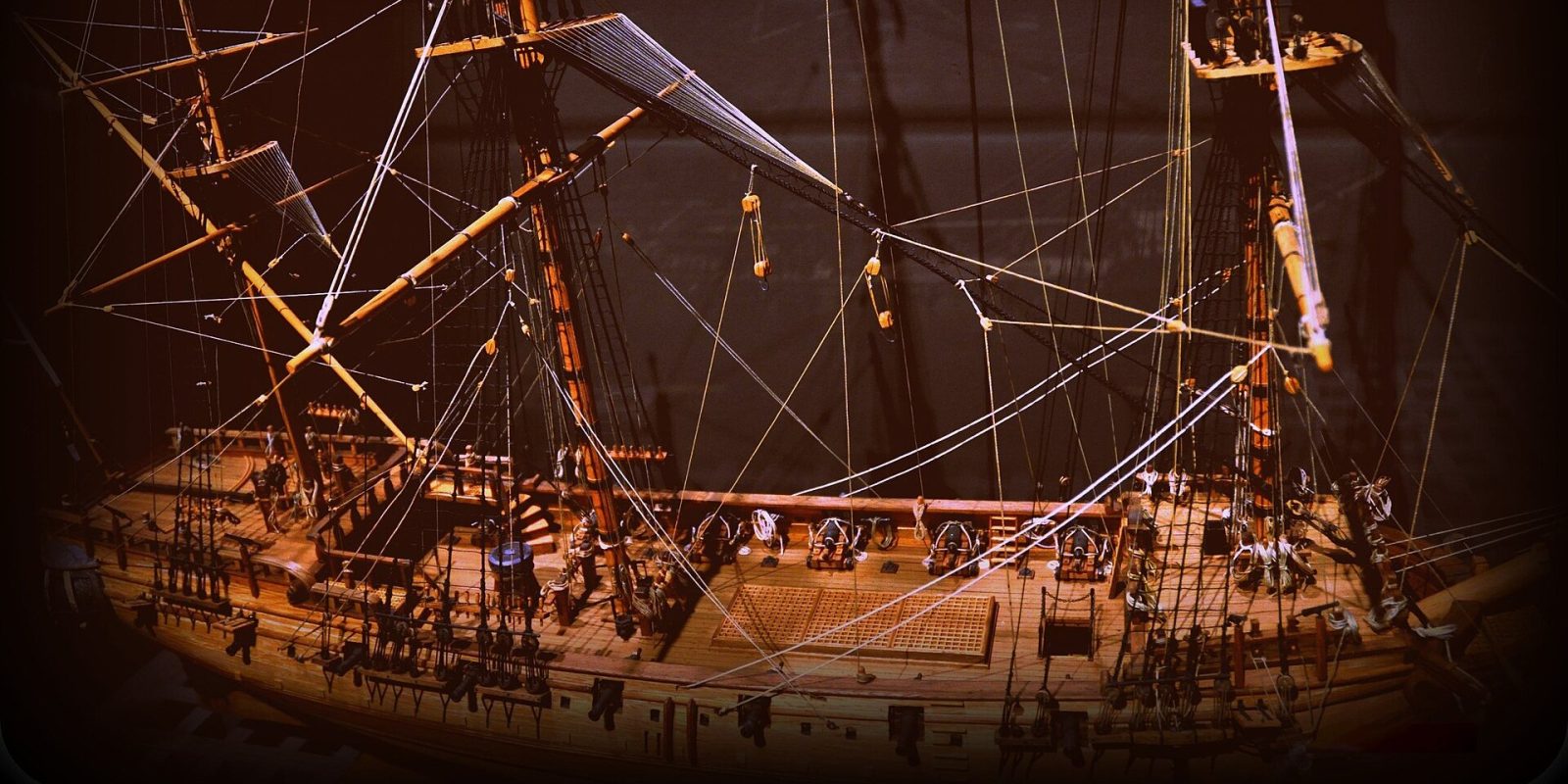
On the Outer Cape, the long Atlantic beaches of Wellfleet face open ocean, and on a calm summer day it’s hard to picture what happens here in a real nor’easter. In April 1717 one of those storms drove the pirate ship Whydah Gally onto the sandbars off Wellfleet and broke her apart. It’s one of the best-documented pirate wrecks in history, and it also left Cape Cod with one of its most loved ghost stories: Black Sam Bellamy and Maria “Goody” Hallett, the Witch of Wellfleet. As always, I’ll tell you the real history first, then the legends, and keep the two separate.
One note on geography before we start. You’ll sometimes see this story told as happening in “Cape Cod Bay”, but the Whydah wrecked on the Atlantic side of the Cape, off the outer beach of Wellfleet. The bay side gets its own little sidebar further down.
A slave ship turned pirate flagship
The Whydah was built in London in 1715 for the transatlantic slave trade. According to the National Park Service, she was named for the West African slaving port of Whydah (today’s Ouidah, in Benin). On her maiden voyage she took on nearly 500 enslaved Africans, carried them to the Caribbean, and loaded goods such as sugar, indigo, precious metals and medicinal ingredients for the trip home to England. It’s worth remembering, as the Park Service points out, that before she was a romantic pirate ship she was a ship built to carry human beings in chains.
In early 1717, on that return voyage, the Whydah was captured by the pirate Samuel Bellamy. He was called “Black Sam” for his jet-black hair, and he had a reputation as a Robin Hood-like figure. Bellamy and his crew captured at least 53 ships between 1716 and 1717, which is why he’s often called the wealthiest pirate of the Golden Age of Piracy. The Whydah was large and fast, so he made her his flagship. His crew was a mixed one, with men from many backgrounds, including formerly enslaved Africans, and even a boy of about eleven.
The storm off Wellfleet
Bellamy then sailed north up the coast with his small fleet. On the night of 26 April 1717, a violent nor’easter caught them off Cape Cod. The Whydah was driven onto the shallow sandbars off Wellfleet, where she broke apart in the surf. Of the 143 men aboard, only two survived. Bellamy’s body was never found. With the ship went treasure taken from more than fifty plundered vessels.
That stretch of coast was deadly long before and long after the Whydah. The National Park Service estimates that more than 3,000 ships have wrecked on Cape Cod in 300 years of recorded history, most of them on the sandbars a few hundred yards off the outer beach, where storm-driven ships ground and are broken up by the waves.
Cotton Mather and the pirates on trial
Some of Bellamy’s men who survived the storm, including crew from another ship in his fleet, ended up on trial in Boston. Six were convicted on 22 October 1717 and executed on 15 November 1717. The famous Puritan minister Cotton Mather spoke with the condemned men on their way to execution and published an account titled Instructions to the Living, from the Condition of the Dead, a “brief relation of remarkables in the shipwreck of above one hundred pirates” cast away “in the ship Whido” on 26 April 1717. Mather’s pamphlet is one of the main primary sources for the wreck.
Found again in 1984
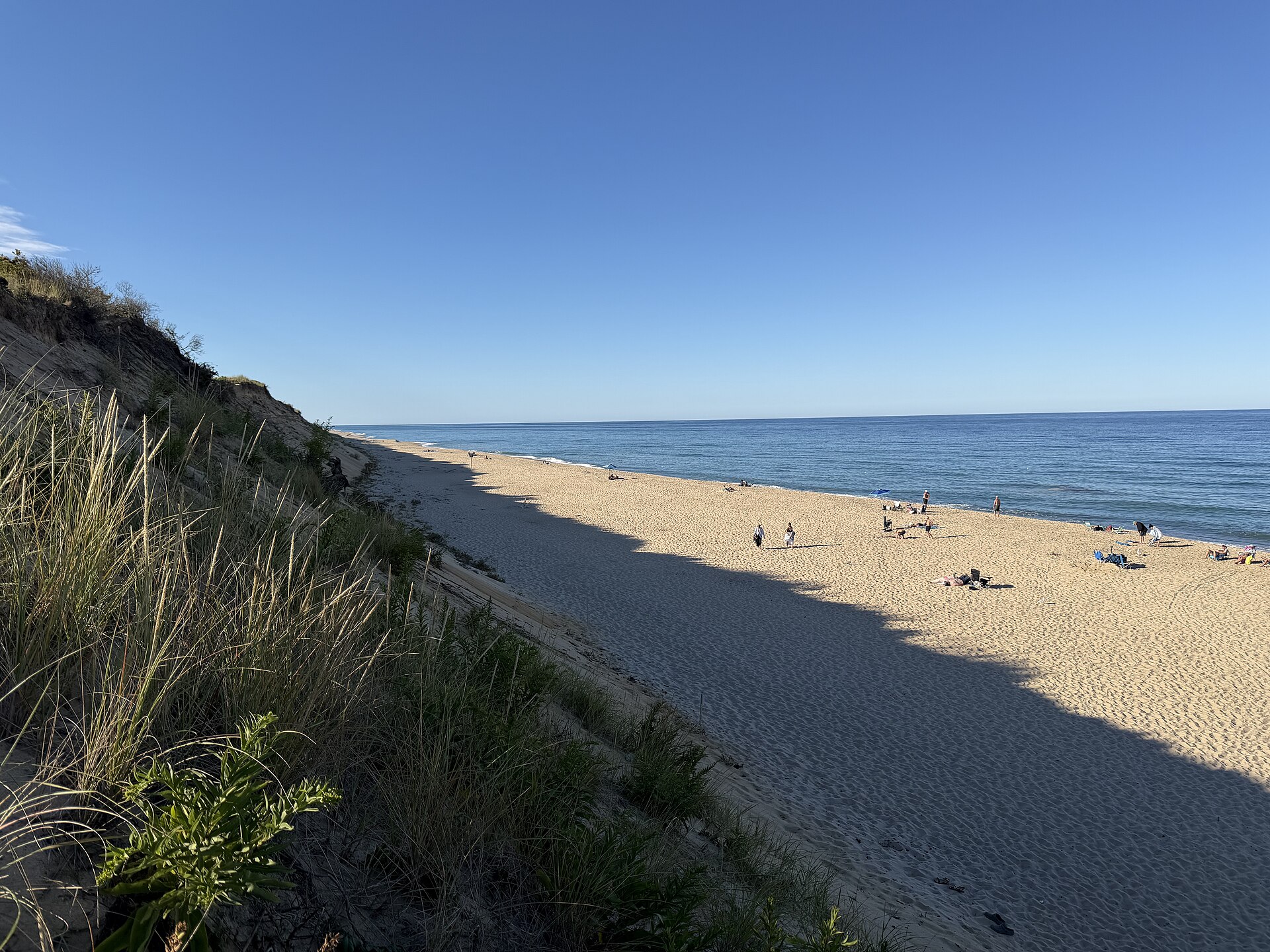
For more than 250 years, the Whydah was a story. Then in 1984, underwater explorer Barry Clifford found and authenticated the wreck off Cape Cod, more or less where the stories said it would be. It became the first authenticated Golden Age pirate shipwreck, and archaeological work on it is still going on. Many thousands of artifacts, including coins, have been brought up over the years, and you can see them at the Whydah Pirate Museum in West Yarmouth on Cape Cod, and at the Real Pirates exhibit in Salem.
The legend of Maria “Goody” Hallett
Now for the legends. Bellamy’s life is full of gaps, and Cape Cod has filled them with stories. Most begin with a romance. In the usual version, a young Sam Bellamy came to the Cape and fell in love with a local girl named Maria Hallett. Her parents didn’t approve, so he went off to make his fortune, first as a privateer and then as a pirate. Some versions say she was carrying his child when he left. And when the Whydah sailed north in 1717, the story goes, Bellamy was coming back to Cape Cod to marry her.
The Witch of Wellfleet
From there the tales split. In the darkest version, Maria’s baby died, the town shunned her, and in her bitterness she turned to the devil, who made her a witch. When she learned that Bellamy was finally coming back, she used her black magic to raise the storm that sank the Whydah off Wellfleet. That’s why she’s remembered as “Goody” Hallett and the Witch of Wellfleet. Other tellers prefer a gentler ending, in which Maria simply waited for her love, and in one version Bellamy survived the wreck and the two went off to Provincetown together.
Her ghost on Marconi Beach
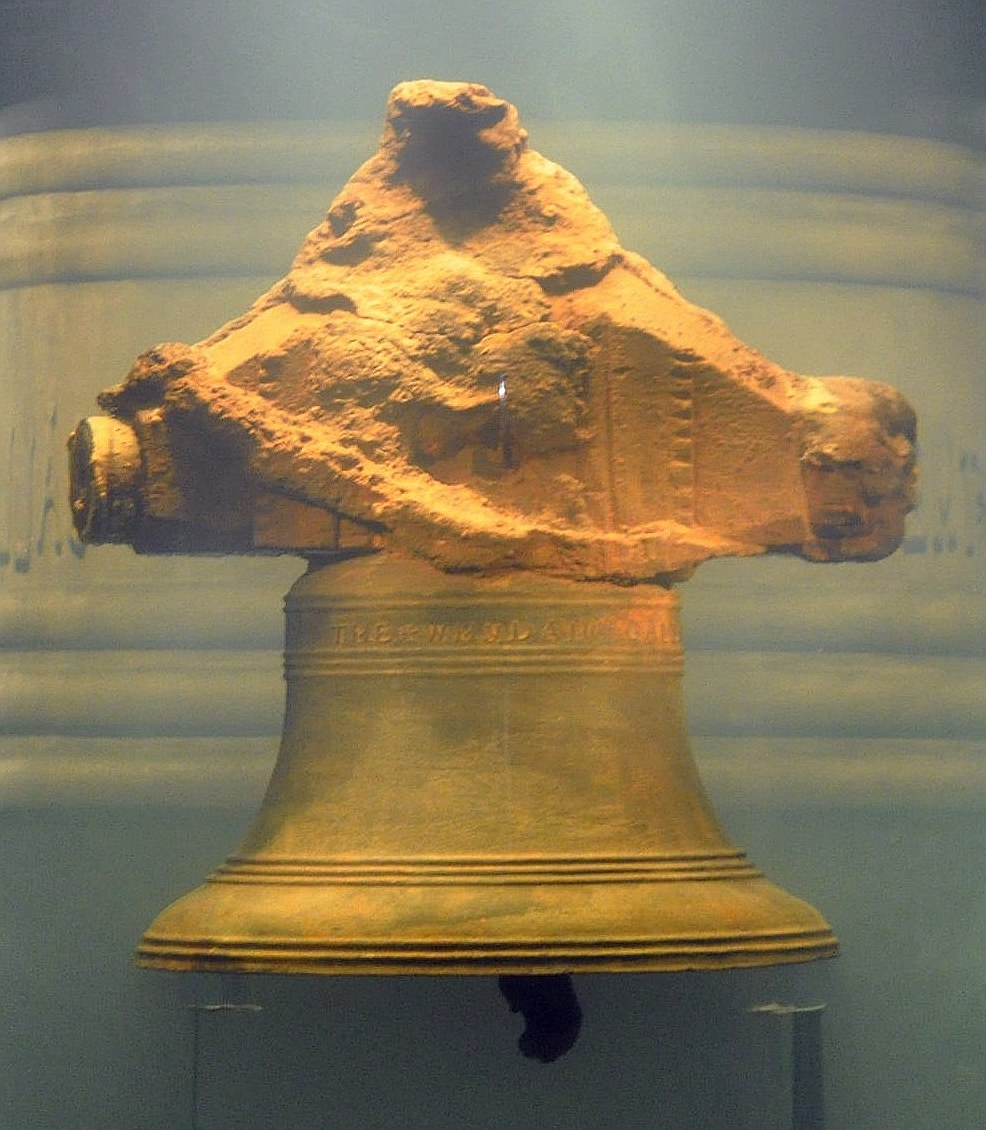
Whatever happened to her, Maria’s ghost is said to walk Marconi Beach in Wellfleet. Locals say that on dark, stormy nights when the wind is wailing, if you listen closely you can hear the cries of Goody Hallett. There’s even a lovely extra twist from Truro: opera singer Jenny Lind is supposed to have sung from the tower that now stands near Highland Light, and lore says her singing can still be heard on nights when Goody Hallett’s screams fill the sky, strong enough to ward off the witch.
Bellamy’s ghost and the coins
Bellamy’s crew haven’t entirely left either. An old tale collected in B.A. Botkin’s A Treasury of New England Folklore says that for many years after the wreck, a man “of a very singular and frightful aspect” was seen travelling the Cape every spring and autumn, and was believed to be one of Bellamy’s crew. Other stories have Black Sam himself wandering the shore looking for Maria, and say that coins from the Whydah still wash up on the beach after storms.
Did Maria really exist?
This is the honest part. There is real debate about whether Maria Hallett was ever a real person. Her identity has never been confirmed from primary documents, though the Whydah Pirate Museum’s historian has called the story “plausible”, and Kathleen Brunelle, author of Bellamy’s Bride: The Search for Maria Hallett of Cape Cod, believes she really existed. So the wreck, the storm, the treasure and the trial are history, while Maria and her ghost belong to folklore, at least for now.
Sidebar: ghosts on the bay side
The Whydah went down on the Atlantic side, but the Cape Cod Bay side of the Outer Cape has a couple of eerie stories of its own.
The Target Ship
For more than half a century, a ghostly hulk sat on the horizon of Cape Cod Bay. She was the SS Longstreet, a World War II Liberty Ship that was towed into the bay after the war and deliberately grounded in about twenty feet of water as a target for practice bombing runs by planes from Otis Air Force Base. For decades, crowds gathered on the beaches of Brewster, Orleans, Eastham and Wellfleet to watch the bombing, by day and by night. The runs ended for safety reasons in the early 1970s. After that the wreck became an artificial reef and a fishing spot, and over the years she grew more and more skeletal, covered in plants seeded by the gulls and cormorants that nested on her, until she finally disappeared beneath the waves.
Lumpkin’s Light
Off Wellfleet’s western shore once stood Billingsgate Island, sometimes called the “Atlantis of Cape Cod”. It had a small community and a lighthouse in the 19th century, but it gradually washed away and was gone beneath the waves by the time of World War II. Some of its residents swore they often saw a strange light between Billingsgate and the Brewster shore. It was said to come from Lumpkin’s Hole, a fishing spot where the body of a fisherman named Lumpkin was found after he disappeared. The light was seen, the story goes, until a gas buoy was put at Billingsgate.
Visiting tips
Whydah Pirate Museum, West Yarmouth. This is the place to see real artifacts recovered from the wreck. Check the museum’s website for current hours and ticket prices before you go, as they change with the season.
Marconi Beach, Wellfleet. Marconi Beach is part of Cape Cod National Seashore, and it’s the beach most linked with Goody Hallett’s ghost. The beach sits below tall dunes, so expect stairs. The Seashore charges entrance fees at its beaches in summer, so check the National Park Service website for current fees and parking.
Stay safe on stormy nights. If you go looking for Maria on a wild night, stay well back from the surf and the edge of the dunes. The same nor’easters that wrecked the Whydah still make the outer beach dangerous, and the dunes are fragile, so use the marked paths.
Make a day of it. The Highland Light grounds in Truro give a view of the Jenny Lind Tower, and on the bay side you can look out from Wellfleet toward Billingsgate Shoal, which still appears at low tide. Remember that shipwreck remains in the National Seashore are federally protected, so look but don’t take.
My take
The Whydah is that rare story where the legend turned out to be right about the treasure. Whether Goody Hallett really waited on the dunes for her pirate, nobody knows. But stand on Marconi Beach when the wind is howling off the Atlantic, and it’s easy to understand why people still listen for her.
FAQ
Where did the Whydah sink?
Off Wellfleet, on the Atlantic side of Cape Cod, during a nor’easter on 26 April 1717. Not in Cape Cod Bay.
How many people survived the Whydah wreck?
Only two of the 143 men aboard survived. Captain Bellamy’s body was never found.
Who was Maria “Goody” Hallett?
In Cape Cod legend, she was Black Sam Bellamy’s lover, and in some versions the Witch of Wellfleet who raised the storm that sank his ship. Her existence has never been confirmed from primary records.
Where can I see treasure from the Whydah?
At the Whydah Pirate Museum in West Yarmouth on Cape Cod, and at the Real Pirates exhibit in Salem.
Top image: Model of the Whydah Gally. Photo: jjsala, CC BY 2.0, via Wikimedia Commons