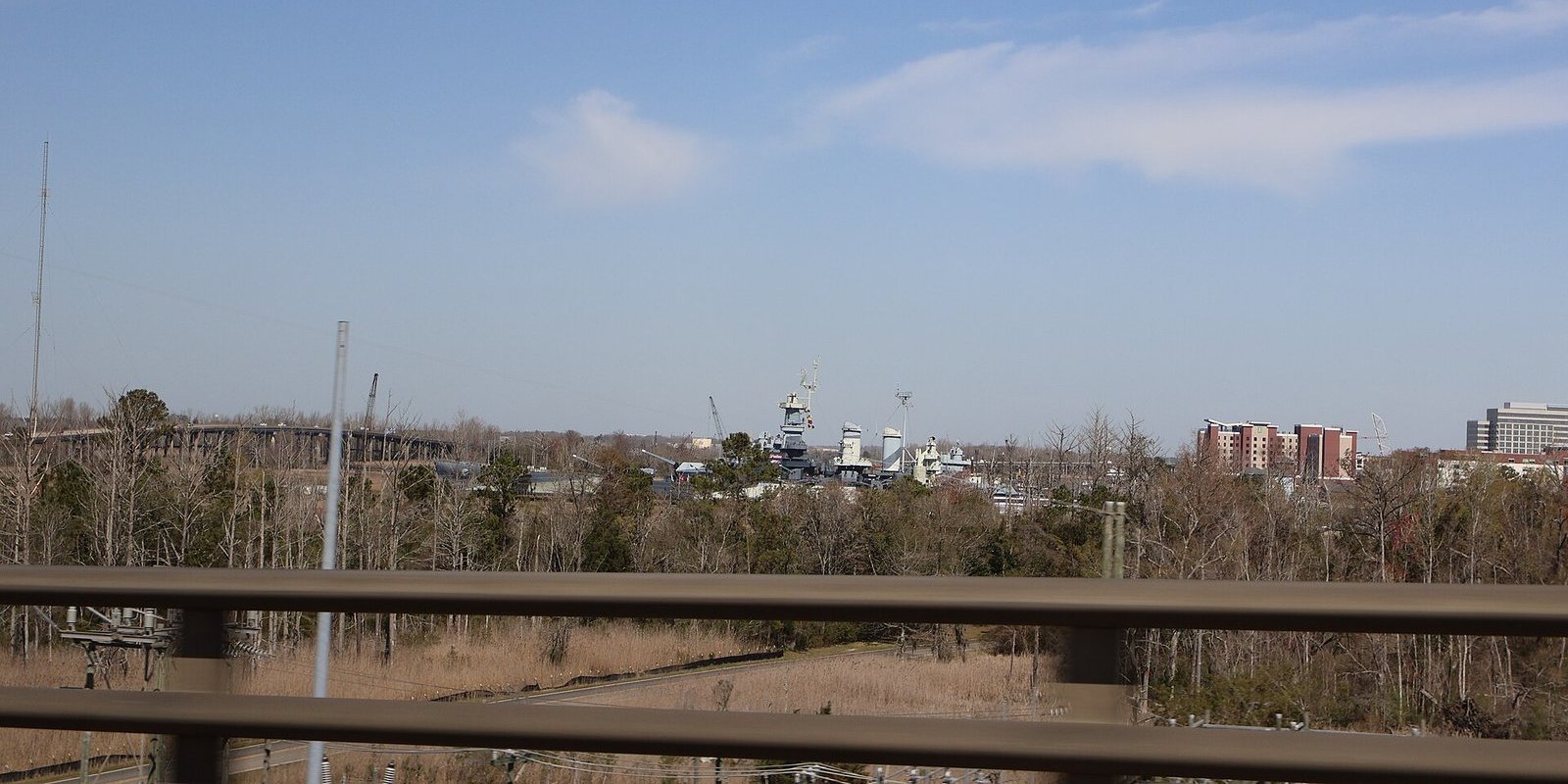
Across the Cape Fear River from downtown Wilmington, a grey battleship sits in a quiet basin, her nine 16-inch guns pointed toward the city. The Battleship North Carolina is one of the great American museum ships, a memorial to the North Carolinians who died in World War II. She’s also, by many accounts, one of the most haunted places in the state. As always, I’ll tell you her real history first, then the legends, and keep the two clearly apart.
If you read my post on the USS Alabama in Mobile, you’ll notice a lot in common: both are WWII fast battleships, both were saved by public campaigns that children helped fund, and both have their ghost stories. They aren’t sisters, though. The North Carolina is the lead ship of her own class, the North Carolina class, with one sister, USS Washington. The Alabama belongs to the slightly later South Dakota class.
“The Showboat”
North Carolina (BB-55) was the first new American battleship in years. Her keel was laid at the New York Navy Yard in Brooklyn in October 1937, and she was commissioned on 9 April 1941, eight months before Pearl Harbor. She was 728 feet long, carried nine 16-inch guns in three turrets plus twenty 5-inch guns, and had a wartime crew of about 2,300 men.
While she was fitting out and running trials off New York, she drew so much attention, with crowds watching her come and go, that she earned the nickname “the Showboat”. It stuck for the rest of her career.
A Pacific war record
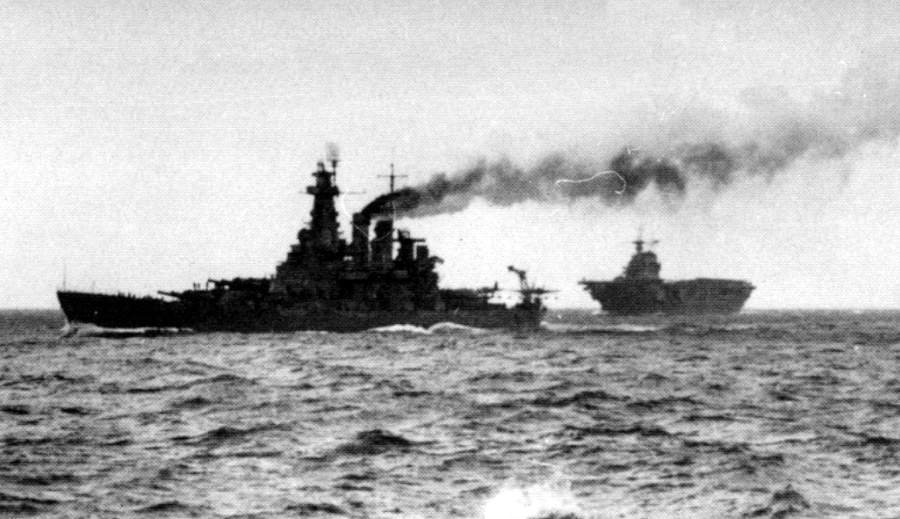
After Pearl Harbor she first stayed in the Atlantic in case the German battleship Tirpitz broke out, then went to the Pacific in mid-1942. She was there for the Guadalcanal landings in August 1942, guarding the carrier Enterprise. At the Battle of the Eastern Solomons on 24 August 1942 her anti-aircraft gunners put up such a heavy barrage that the ship seemed to be on fire, and she claimed several Japanese aircraft. One of her men was killed by strafing.
Then, on 15 September 1942, the Japanese submarine I-19 fired a spread of torpedoes at the carrier Wasp. Several hit and sank Wasp, and others ran on toward the next task group. One hit the destroyer O’Brien and one struck North Carolina on the port side, about 20 feet below the waterline, tearing a hole roughly 32 by 18 feet. Five of her men were killed. Her crew quickly corrected the list, and she kept up with the fleet at speed before going to Pearl Harbor for repairs.
She returned to the fight and went on to serve through nearly every major Pacific campaign: the Gilberts and Marshalls, Truk, the Marianas and the Battle of the Philippine Sea, the Philippines, Iwo Jima, Okinawa and the final strikes on Japan. She bombarded islands, guarded carriers, and her gunners shot down many aircraft. She earned 15 battle stars, the most of any U.S. battleship in WWII. Over the whole war she lost 10 men killed and 67 wounded. After the war she carried servicemen home in Operation Magic Carpet, and she was decommissioned in June 1947.
Save Our Ship
In 1960 the Navy struck North Carolina from its list, and she was due to be scrapped. A North Carolina man, James Craig, started a campaign to bring her home as a war memorial. The “Save Our Ship” (SOS) campaign was helped by newspapers and by Raleigh TV station WRAL. Schoolchildren across the state joined in, and many collected dimes and quarters. Children who gave are often said to have received a membership card or certificate, but I couldn’t confirm the details. The campaign raised more than $330,000, past its $250,000 goal.
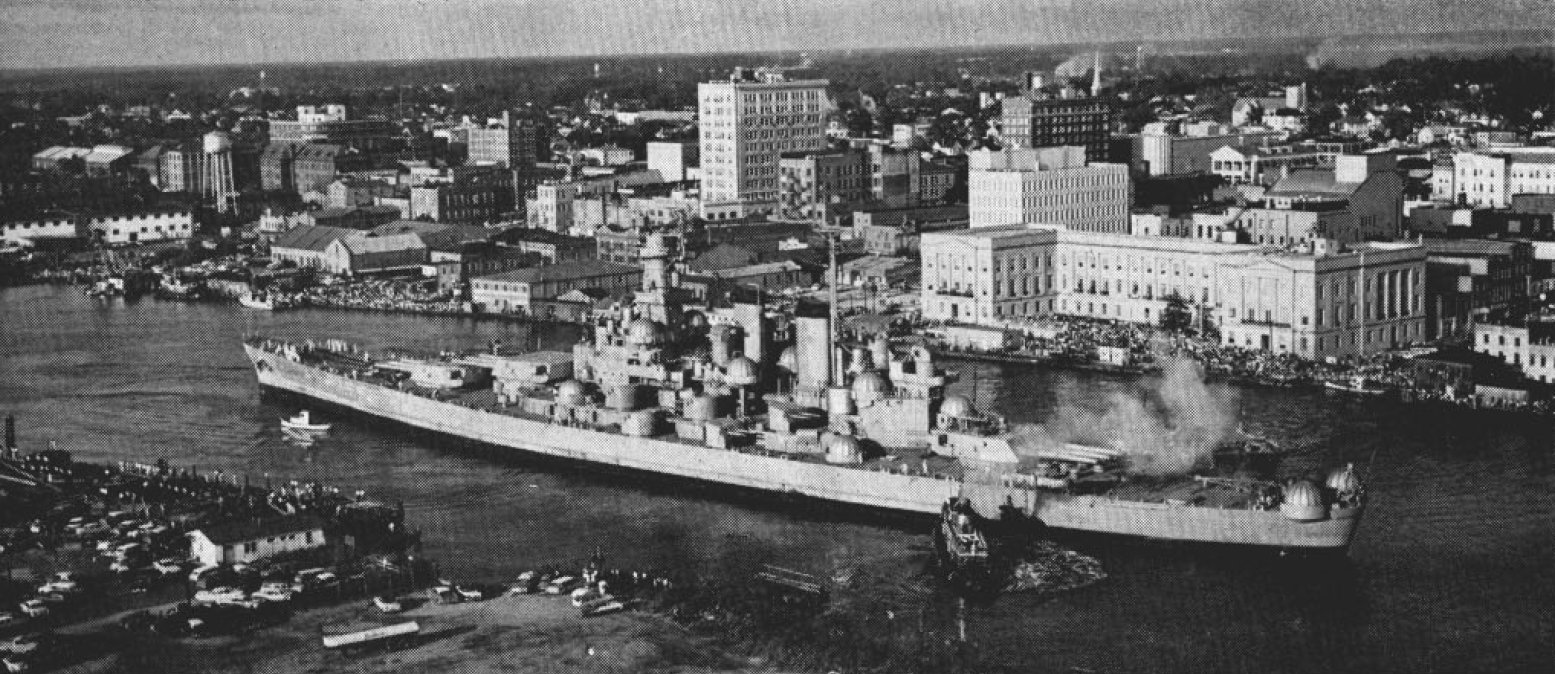
Wilmington was chosen over Southport and Morehead City, partly because it was further inland and safer from hurricanes. The state took over the ship on 6 September 1961, and nine tugs towed her south from Bayonne, New Jersey. On 2 October 1961, as she was being brought up the Cape Fear River, the tugs lost control and she bumped into a floating seafood restaurant, with only minor damage. She was dedicated on 29 April 1962 as the state’s memorial to its more than 11,000 people who died in World War II.
The cofferdam and the hull repairs
Sitting in river water for decades took its toll. By the early 2000s parts of her hull plating, originally about five-eighths to three-quarters of an inch thick, had corroded to as little as 0.15 inches. A dry dock was too expensive, so, like the Alabama, she got a cofferdam: a wall built around the hull so the water could be pumped out and the steel repaired and repainted in place. A walkway on top of the cofferdam, opened in 2018, lets visitors walk all the way around the ship, and the hull repairs were completed in 2021. Rising sea levels mean the site now floods far more often than it used to, so more work is likely.
The ghost stories
Now for the legends. What follows comes from staff, visitors, ghost hunters and TV shows, not from historical records. Investigators often say they’re drawn to the ship because of her real deaths, especially the five men killed in the 1942 torpedo hit.
The young blond sailor
The best-known ghost is a young man with blond or very light hair, seen walking through passageways and looking out of portholes. A longtime night watchman who lived aboard described seeing a figure with white, flame-like hair, and feeling a hand on his shoulder in the mess hall. Some people link the young sailor to the torpedo strike, and say he is seen around the washroom area near where men died, but there is no record identifying him.
Hatches, lights and footsteps
Other reports are classic ship haunting: hatches and doors opening or closing by themselves, lights switching on and off, footsteps in empty passageways, objects moving or being thrown, voices, cold spots and the feeling of being touched.
Ghost Hunters
In an episode of the Syfy series Ghost Hunters that aired in August 2005 (season 2), the TAPS team spent two nights on board. They reported unexplained EMF readings in the area of the torpedo hit, crashing and banging noises, a door shutting behind them, a shadow they chased into a room with no other exit, and a voice recording that seemed to say “ship”. Jason Hawes stopped short of saying the ship is haunted, but said they found more activity than usual. The ship has since appeared on other paranormal shows as well.
Ghost Ship and ghost hunts
For years the museum ran “Ghost Ship”, a staged Halloween haunted-house night with green lights, zombies and scares below decks, and a gentler trick-or-treat event for children. I couldn’t find a 2026 Ghost Ship listing, so it may not be running this year; check before you plan around it. Separately, outside paranormal groups host after-hours ghost hunts aboard. This autumn one company has advertised evening investigations from 8 p.m. to 2 a.m. for around $150 per person.
Visiting the Battleship North Carolina
The ship is at 1 Battleship Road NE, Wilmington, on the west bank of the Cape Fear River, a short drive or water-taxi ride from downtown. The self-guided route takes you from the main deck and turrets down through crew berthing, the galley, sick bay, the engine rooms and more. Expect steep ladders and tight spaces, and it gets hot below decks in summer. There are also guided “hidden battleship” tours of areas usually closed to the public.
As a rough guide, the memorial has typically opened daily from 8 a.m. to 5 p.m., with free on-site parking. Adult admission has recently been in the twenty-dollar range, with discounts for children, seniors and military. Prices and hours change, so check battleshipnc.com before you visit.
My take
Whether or not the young blond sailor still walks her passageways, the Showboat is a real survivor, and a memorial to real people. Stand by the spot where the torpedo hit and remember the five men who never came home from that September day in 1942.
FAQ
Is the Battleship North Carolina haunted?
There’s no proof, but staff, visitors and the Ghost Hunters team have reported apparitions, footsteps, moving hatches and unexplained noises, especially near where five men died in the 1942 torpedo hit.
Are the North Carolina and the Alabama sister ships?
No. North Carolina is the lead ship of the North Carolina class (her sister is USS Washington). USS Alabama is a South Dakota-class battleship.
Why is she called “the Showboat”?
She drew so much public attention while fitting out and on trials around New York in 1941 that the nickname stuck.
Can you do a ghost hunt on the ship?
Outside paranormal groups have run after-hours ghost hunts aboard. Check the battleship’s website and the organizer’s listing for current dates.
Top image: Battleship North Carolina seen from the Cape Fear Memorial Bridge, Wilmington. Photo: DiscoA340, CC BY-SA 4.0, via Wikimedia Commons